
Create your Financial Management Legal Document from scratch

Start Building Now
Title decoration

Here's how it works

01. Start with a blank Financial Management Legal Document
Open the blank document in the editor, set the document view, and add extra pages if applicable.
02. Add and configure fillable fields
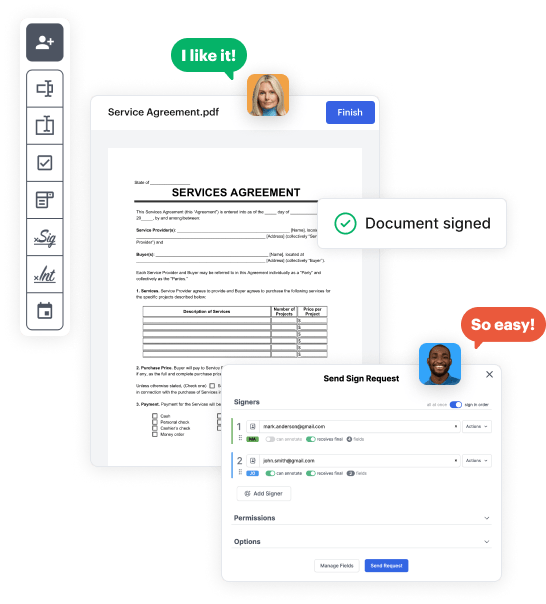
Use the top toolbar to insert fields like text and signature boxes, radio buttons, checkboxes, and more. Assign users to fields.
03. Distribute your form
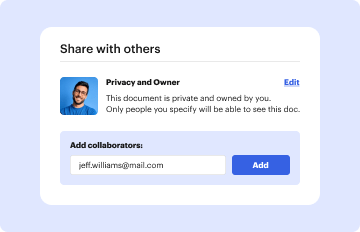
Share your Financial Management Legal Document in seconds via email or a link. You can also download it, export it, or print it out.

A detailed walkthrough of how to craft your Financial Management Legal Document online

Form edit decoration

Step 1: Start with DocHub's free trial.

Visit the DocHub website and register for the free trial. This provides access to every feature you’ll need to create your Financial Management Legal Document without any upfront cost.

Step 2: Access your dashboard.

Log in to your DocHub account and navigate to the dashboard.

Step 3: Initiate a new document.

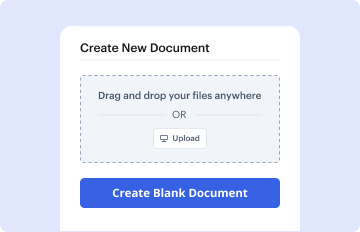
Click New Document in your dashboard, and choose Create Blank Document to create your Financial Management Legal Document from the ground up.

Step 4: Use editing tools.

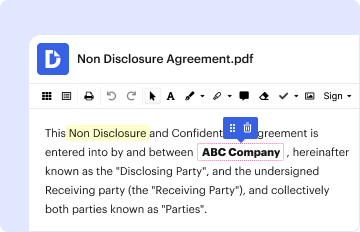
Add various fields such as text boxes, radio buttons, icons, signatures, etc. Arrange these elements to match the layout of your document and assign them to recipients if needed.

Step 5: Modify the form layout.

Rearrange your document quickly by adding, moving, removing, or combining pages with just a few clicks.

Step 6: Set up the Financial Management Legal Document template.

Convert your newly crafted form into a template if you need to send multiple copies of the same document repeatedly.

Step 7: Save, export, or share the form.

Send the form via email, share a public link, or even publish it online if you aim to collect responses from a broader audience.


be ready to get more

Build your Financial Management Legal Document in minutes

Start creating now

Got questions?

We have answers to the most popular questions from our customers. If you can't find an answer to your question, please contact us.
Contact us
Finance policies examples include programs on ethical financial conduct and compliance. Decision-Making Support: Policies provide guidance for financial decision-making aligned with organizational goals. For instance, a policy on capital budgeting facilitates strategic decision-making.
Financial policies define a shared understanding of how the organization will develop its financial practices and manage its resources to provide the best value to the community. Define boundaries. Financial policies define limits on the actions staff may take.
At its core, financial policy formulation involves crafting a set of guidelines and strategies that govern how a company manages its finances. Its the roadmap that guides decision-making related to budgeting, investment, and risk management.
In business, financial documents are critical since they are often utilized to make key decisions about how to distribute resources and how to manage risks. There are three primary types of financial documents: the balance sheet, the income statement, and the cash flow statement.
Financial policies should be developed collaboratively between the finance officer, the rest of the executive management team, and the board. The objective is to produce a policy that has a deep level of commitment from these participants, so it will have a real impact on decision-making after it is formally adopted.
be ready to get more

Build your Financial Management Legal Document in minutes

Start creating now

Related Q&A to Financial Management Legal Document

Your document management software must allow users to сreate various tasks (review a document, edit a document, compare documents, etc.) and assign them to other users. The system must allow for creating tasks in relation to the Start or Expiry date of legal documents.
What is Legal Document Management? As the name suggests, legal document management refers to properly storing and organizing documents within a law firm.
Creating Financial Policies that Work Decide who should create the policy. Gather enough information to develop the policy. Set a reasonable time frame to develop the policy and stick to the deadline. Clarify why the policy is needed. Clarify the existing situation.

Additional resources on building your forms


