

Get and handle Estate Planning Trusts online

Accelerate your document operations using our Estate Planning Trusts online library with ready-made form templates that meet your needs. Get the form, alter it, complete it, and share it with your contributors without breaking a sweat. Start working more efficiently together with your documents.

The best way to manage our Estate Planning Trusts:

  1. Open our Estate Planning Trusts and look for the form you require.
  2. Preview your form to ensure it’s what you want, and click Get Form to start working on it.
  3. Alter, add new text, or point out important information with DocHub tools.
  4. Complete your form and preserve the changes.
  5. Download or share your document with other people.

Discover all the possibilities for your online document administration using our Estate Planning Trusts. Get your totally free DocHub profile right now!


Video Guide on Estate Planning Trusts management

video background

Commonly Asked Questions about Estate Planning Trusts

What Are the Advantages Disadvantages of Putting a House in a Trust? Protection Against Future Incapacity. It May Save Money on Estate Taxes. It Can Avoid Probate. Asset Protection. Trusts Can Cost More to Maintain. Your Other Assets Are Still Subject to Probate. Trusts Are Complex.
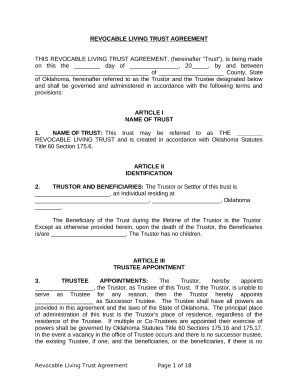
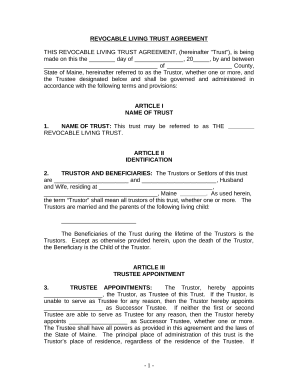
Common Types of Trusts in Estate Planning Revocable Living Trusts (Most common) Irrevocable Trusts. Testamentary Trusts (Commonly used in simple estate planning)
One type of trust that helps protect assets is an intentionally defective grantor trust (IDGT). Any assets or funds put into an IDGT arent taxable to the grantor (owner) for gift, estate, generation-skipping transfer tax, or trust purposes.
Complexity and Cost Establishing and maintaining a trust can be complex and expensive. Trusts require legal expertise to draft, and ongoing management by a trustee may involve administrative fees.
A credit-shelter trust offers a way for you to pass on your estate and lower estate taxes. Under a credit-shelter trust, your surviving heirs would not receive your property (which would then be subject to an estate tax). Instead, your heirs would receive an interest in the trust itself.
With that said, revocable trusts, irrevocable trusts, and asset protection trusts are among some of the most common types to consider.
Here are some of the most common options: Bare trust this is the simplest kind of trust. Interest in possession trust the beneficiary can get income from the trust straight away, but doesnt have a right to the cash, property or investments that generate that income.
A revocable living trust provides you with more flexibility. You can use it to protect your assets in case of incapacity and to avoid having assets transfer through probate, but cannot use it to protect against creditor claims or avoid estate taxes. An irrevocable trust provides you with more protection.
