
Create your Employment Contract Legal Form from scratch

Start Building Now
Title decoration

Here's how it works

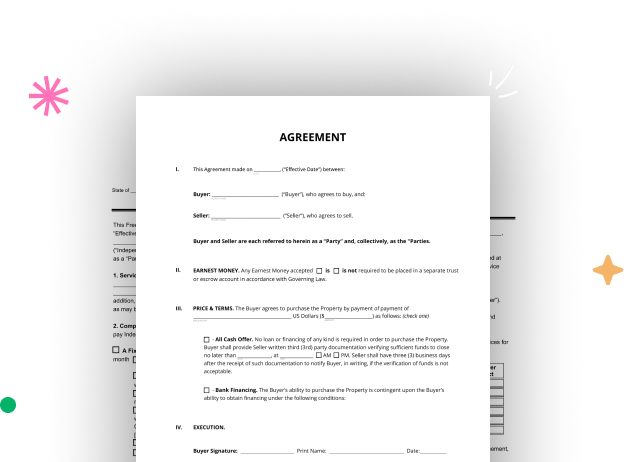
01. Start with a blank Employment Contract Legal Form
Open the blank document in the editor, set the document view, and add extra pages if applicable.
02. Add and configure fillable fields
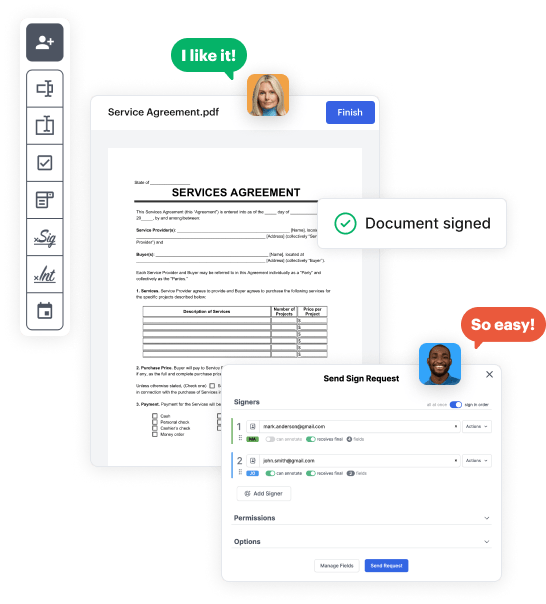
Use the top toolbar to insert fields like text and signature boxes, radio buttons, checkboxes, and more. Assign users to fields.
03. Distribute your form
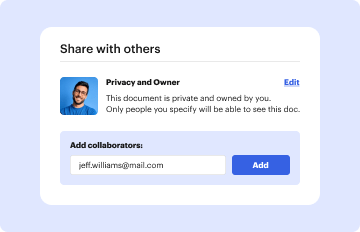
Share your Employment Contract Legal Form in seconds via email or a link. You can also download it, export it, or print it out.

Create your Employment Contract Legal Form in a matter of minutes

Form edit decoration

Step 1: Access DocHub to build your Employment Contract Legal Form.

Start by logging into your DocHub account. Utilize the pro DocHub functionality at no cost for 30 days.

Step 2: Navigate to the dashboard.

Once signed in, head to the DocHub dashboard. This is where you'll create your forms and handle your document workflow.

Step 3: Create the Employment Contract Legal Form.

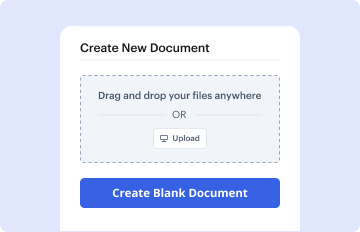
Hit New Document and choose Create Blank Document to be taken to the form builder.

Step 4: Design the form layout.

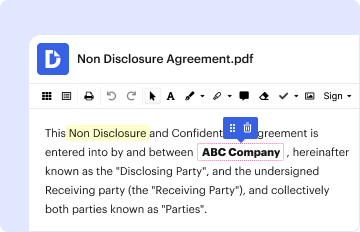
Use the DocHub tools to insert and arrange form fields like text areas, signature boxes, images, and others to your document.

Step 5: Insert text and titles.

Include needed text, such as questions or instructions, using the text tool to guide the users in your document.

Step 6: Customize field properties.

Adjust the properties of each field, such as making them required or arranging them according to the data you expect to collect. Assign recipients if applicable.

Step 7: Review and save.

After you’ve managed to design the Employment Contract Legal Form, make a final review of your document. Then, save the form within DocHub, transfer it to your chosen location, or share it via a link or email.


be ready to get more

Build your Employment Contract Legal Form in minutes

Start creating now

Got questions?

We have answers to the most popular questions from our customers. If you can't find an answer to your question, please contact us.
Contact us
How to write an employment contract Title the employment contract. Identify the parties. List the term and conditions. Outline the job responsibilities. Include compensation details. Use specific contract terms. Consult with an employment lawyer.
The most common contract is a permanent contract, which means the term of work is indefinite. Employees on permanent contracts can be full-time or part-time and typically receive benefits.
The agreement should be clear and concise, and it should cover all aspects of the teams work. The agreement should specify the teams goals, how team members will communicate with each other, what happens if someone violates the agreement, and so on.
How to write a contract agreement in 7 steps. Determine the type of contract required. Confirm the necessary parties. Choose someone to draft the contract. Write the contract with the proper formatting. Review the written contract with a lawyer. Send the contract agreement for review or revisions.
An Employee Handbook Agreement form is a document that outlines the policies, procedures, and expectations of an organization for its employees. It serves as a written agreement between the employer and the employee, stating that the employee has received and understands the policies outlined in the handbook.
be ready to get more

Build your Employment Contract Legal Form in minutes

Start creating now

Related Q&A to Employment Contract Legal Form

Guide to writing contracts of employment Names of the parties. The full details of the business, and the employees full name and address. Employment contract start date. Employees job title and description. Workplace. Working hours. Probationary period. Salary. Deductions.
What to Include in an employment contract An invitation to begin employment at your company. Job title and employment status. Job responsibilities and expectations (i.e. a job description) Start date. End date, if it is a fixed-term contract. Name of manager, supervisor or other reporting relationships. Work hours.

Additional resources on building your forms


