Create your Employment Agreement from scratch

Start Building Now
Title decoration

Here's how it works

01. Start with a blank Employment Agreement
Open the blank document in the editor, set the document view, and add extra pages if applicable.
02. Add and configure fillable fields
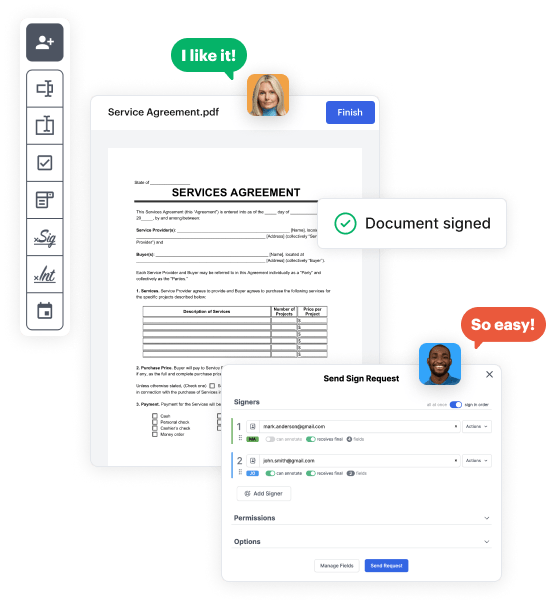
Use the top toolbar to insert fields like text and signature boxes, radio buttons, checkboxes, and more. Assign users to fields.
03. Distribute your form
Share your Employment Agreement in seconds via email or a link. You can also download it, export it, or print it out.

A detailed guide on how to build your Employment Agreement online
Form edit decoration

Step 1: Start with DocHub's free trial.

Go to the DocHub website and register for the free trial. This gives you access to every feature you’ll need to build your Employment Agreement with no upfront cost.

Step 2: Navigate to your dashboard.

Sign in to your DocHub account and proceed to the dashboard.

Step 3: Craft a new document.

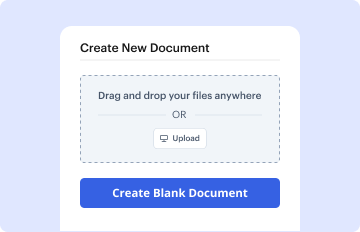
Click New Document in your dashboard, and select Create Blank Document to design your Employment Agreement from scratch.

Step 4: Use editing tools.

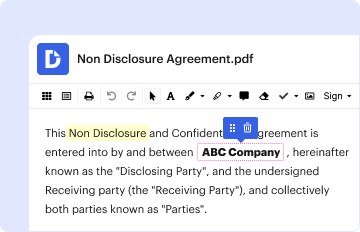
Add various fields such as text boxes, radio buttons, icons, signatures, etc. Arrange these elements to match the layout of your form and designate them to recipients if needed.

Step 5: Modify the form layout.

Rearrange your form quickly by adding, repositioning, removing, or combining pages with just a few clicks.

Step 6: Set up the Employment Agreement template.

Convert your freshly crafted form into a template if you need to send many copies of the same document multiple times.

Step 7: Save, export, or distribute the form.

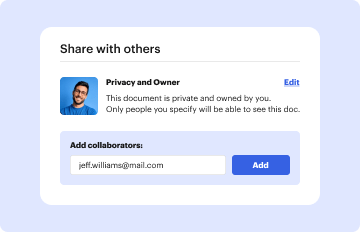
Send the form via email, distribute a public link, or even post it online if you want to collect responses from a broader audience.


be ready to get more

Build your Employment Agreement in minutes

Start creating now

Got questions?

We have answers to the most popular questions from our customers. If you can't find an answer to your question, please contact us.
Contact us
Yes, of course, you can. Technically, no one can force you to work against your will, and you have the right to quit your job anytime for any reason. But, your contract probably specifies whether you have to give your employer notice and any penalties there may be for resigning early.
Employment or employee contracts are typically formal, legally binding written documents that specify the terms and conditions of an employment relationship. They often include clauses regarding confidentiality, non-compete and non-solicitation agreements, and termination clauses.
An employment contract is an enforceable agreement between two parties that contains whatever terms and conditions of employment the parties agree upon and, when accepted, becomes controlling upon the employment relationship. The contract may be oral or written, express or implied (the latter terms are defined below).
Illegality: If the contract involves illegal activities, its automatically void. For example, if you hire someone for a job that violates labor laws, the contract wont hold up in court.
Guide to writing contracts of employment Names of the parties. The full details of the business, and the employees full name and address. Employment contract start date. Employees job title and description. Workplace. Working hours. Probationary period. Salary. Deductions.
be ready to get more

Build your Employment Agreement in minutes

Start creating now

Related Q&A to Employment Agreement

When creating an Employment Contract, you can include the following terms: The type and rate of compensation. The frequency of payment. Vacation time. Specified work hours. Specified work location. Employee responsibilities. Length of a probationary period. Confidentiality, non-solicitation, or non-competition clauses.
Following this step-by-step checklist will mean that you can write your contract with confidence: Know your parties. Agree on the terms. Set clear boundaries. Spell out the consequences. Specify how you will resolve disputes. Cover confidentiality. Check the legality of the contract. Open it up to negotiation.
The elements of a contract Offer. Without an offer, theres nothing to accept and there can be no contract, let alone a legally binding one. Acceptance. Acceptance is when the offeree accepts the specific terms and conditions proposed by the offeror. Awareness. Consideration. Capacity. Legality.

Additional resources on building your forms