
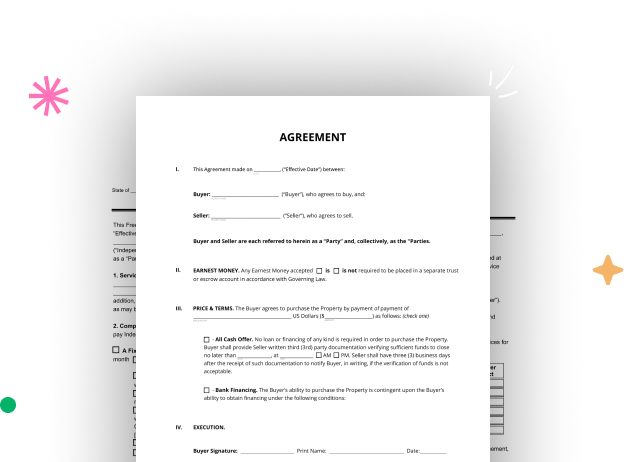
Create your Employee Compensation Claim from scratch

Start Building Now
Title decoration

Here's how it works

01. Start with a blank Employee Compensation Claim
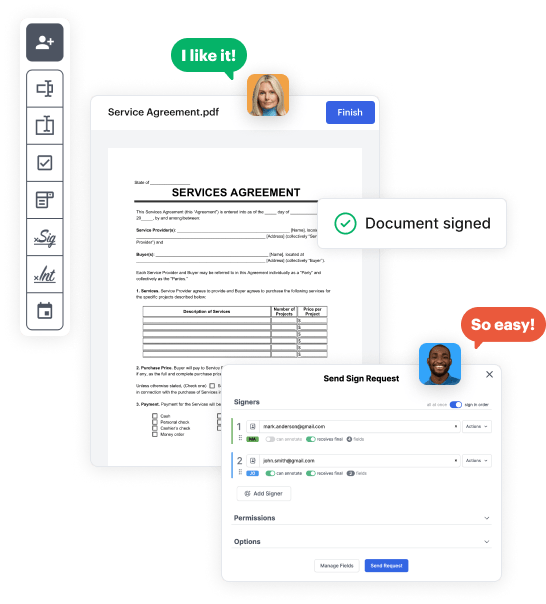
Open the blank document in the editor, set the document view, and add extra pages if applicable.
02. Add and configure fillable fields
Use the top toolbar to insert fields like text and signature boxes, radio buttons, checkboxes, and more. Assign users to fields.
03. Distribute your form
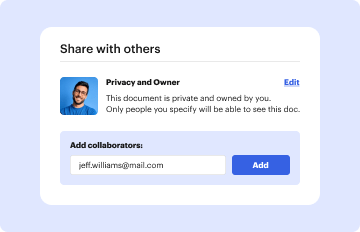
Share your Employee Compensation Claim in seconds via email or a link. You can also download it, export it, or print it out.

A detailed guide on how to design your Employee Compensation Claim online

Form edit decoration

Step 1: Start with DocHub's free trial.

Visit the DocHub website and sign up for the free trial. This gives you access to every feature you’ll need to build your Employee Compensation Claim without any upfront cost.

Step 2: Access your dashboard.

Sign in to your DocHub account and proceed to the dashboard.

Step 3: Craft a new document.

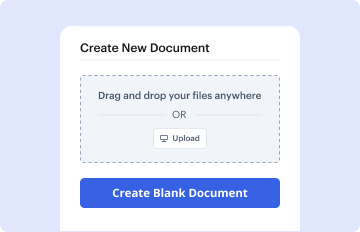
Hit New Document in your dashboard, and choose Create Blank Document to design your Employee Compensation Claim from scratch.

Step 4: Use editing tools.

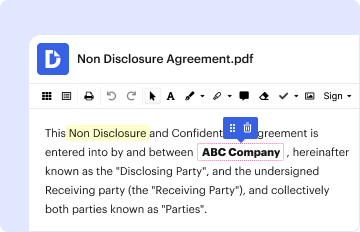
Insert different elements such as text boxes, radio buttons, icons, signatures, etc. Arrange these fields to match the layout of your document and assign them to recipients if needed.

Step 5: Modify the form layout.

Rearrange your document effortlessly by adding, repositioning, deleting, or merging pages with just a few clicks.

Step 6: Create the Employee Compensation Claim template.

Transform your freshly designed form into a template if you need to send many copies of the same document multiple times.

Step 7: Save, export, or distribute the form.

Send the form via email, distribute a public link, or even post it online if you aim to collect responses from a broader audience.


be ready to get more

Build your Employee Compensation Claim in minutes

Start creating now

Got questions?

We have answers to the most popular questions from our customers. If you can't find an answer to your question, please contact us.
Contact us
How to Build a Compensation Plan Step 1: the who, what and why. Step 2: how much and how often. Step 3: represent all functions in the company. Step 4: find out how much your competition pays. Step 5: review it regularly. Step 6: make sure goals are achievable. Step 7: invest in job analysis.
How to Establish Salary Ranges Step 1: Determine the Organizations Compensation Philosophy. Step 2: Conduct a Job Analysis. Step 3: Group into Job Families. Step 4: Rank Positions Using a Job Evaluation Method. Step 5: Conduct Market Research. Step 6: Create Job Grades. Step 7: Create a Salary Range Based on Research.
For example, the employer may offer health insurance, dental insurance, life insurance, short- and long-term disability insurance and vision insurance. Employee retirement plans, like 401(k) plans, are another common form of indirect compensation. Equity-based programs are another compensation offering.
The CA-1 or CA-2 workers compensation forms are available after completing the OSHA-301. The CA-1 should be completed within 30 days of the date of injury to be eligible for continuation of pay (COP). Claims filed on form CA-2 are not eligible for COP.
How to create a compensation plan Determine your compensation philosophy. Outline job architecture by defining roles and levels. Create guidelines for performance evaluations. Define direct compensation (salary, bonus, and equity) Add in benefits. Implement a pay equity process. Conduct post-hoc reviews.
be ready to get more

Build your Employee Compensation Claim in minutes

Start creating now

Related Q&A to Employee Compensation Claim

New York law states that workers have up to two years to file a claim if they are suffering from a work-related illness or injury. For occupational hearing loss, workers have up to three months to report the injury and 90 days to file a workers compensation claim.
What are the best practices for designing a compensation package? Define your compensation philosophy. Conduct a job analysis and evaluation. Research the market and benchmark your pay. Design your pay structure and components. Choose your benefits and perks. Communicate and review your compensation package.
In California, a workplace injury must be reported within 30 days of the incident and a workers compensation claim must be filed within one year. Simply stated, when it comes to filing forms for work-related injuries, the sooner the better.

Additional resources on building your forms


