


Create your Download Warranty Deed Form from scratch

Start Building Now
Title decoration

Here's how it works

01. Start with a blank Download Warranty Deed Form
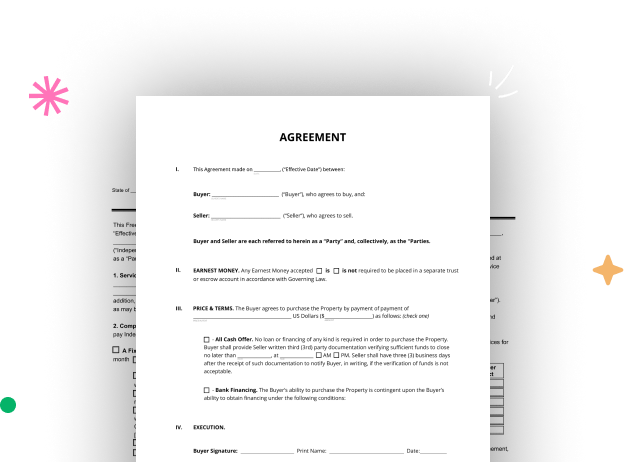
Open the blank document in the editor, set the document view, and add extra pages if applicable.
02. Add and configure fillable fields
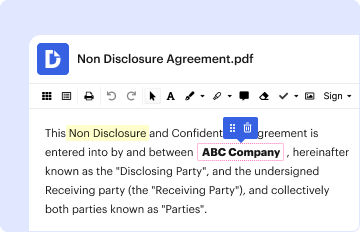
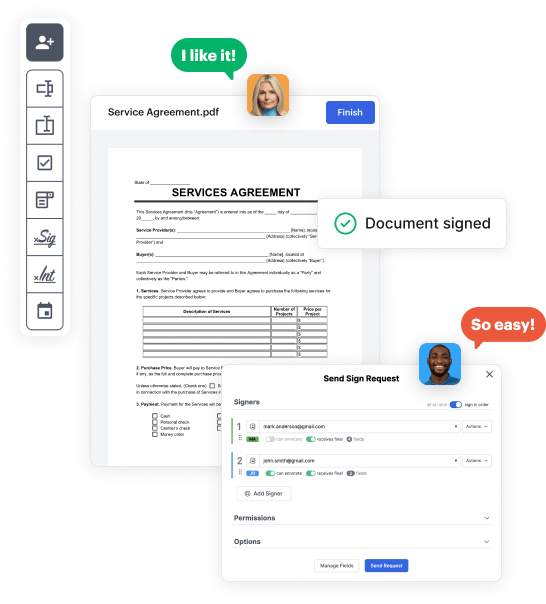
Use the top toolbar to insert fields like text and signature boxes, radio buttons, checkboxes, and more. Assign users to fields.
03. Distribute your form
Share your Download Warranty Deed Form in seconds via email or a link. You can also download it, export it, or print it out.

A detailed walkthrough of how to build your Download Warranty Deed Form online

Form edit decoration

Step 1: Start with DocHub's free trial.

Visit the DocHub website and register for the free trial. This provides access to every feature you’ll need to build your Download Warranty Deed Form with no upfront cost.

Step 2: Navigate to your dashboard.

Log in to your DocHub account and proceed to the dashboard.

Step 3: Initiate a new document.

Click New Document in your dashboard, and select Create Blank Document to design your Download Warranty Deed Form from the ground up.

Step 4: Use editing tools.

Add various elements such as text boxes, radio buttons, icons, signatures, etc. Organize these fields to suit the layout of your form and designate them to recipients if needed.

Step 5: Modify the form layout.

Rearrange your form in seconds by adding, repositioning, removing, or combining pages with just a few clicks.

Step 6: Craft the Download Warranty Deed Form template.

Transform your newly crafted form into a template if you need to send multiple copies of the same document numerous times.

Step 7: Save, export, or distribute the form.

Send the form via email, distribute a public link, or even publish it online if you wish to collect responses from a broader audience.


be ready to get more

Build your Download Warranty Deed Form in minutes

Start creating now

Got questions?

We have answers to the most popular questions from our customers. If you can't find an answer to your question, please contact us.
Contact us
Generally, a grantor would prefer to use a bargain and sale deed because it limits their liability. In contrast, a grantee would prefer a general warranty deed because it gives them the most protection possible.
A general warranty deed is the most common type of deed used for transferring real estate. It basically promises that: not only does the seller have good and proper title to sell the property, but all the prior owners also had good title, thus making a complete chain of ownership; and.
An interspousal transfer deed is used to transfer the property title from one spouse to another. This special type of deed is most commonly used in the case of divorce, when the proceedings result in the requirement that property goes to one spouse over the other.
To complete your property title transfer in Texas, the deed needs to be signed by the seller or grantor in front of a notary. Once the document has been properly acknowledged, it should be filed with the county clerks office in the county where the property is located.
A New York general warranty deed, also known as a deed with full covenants, is a document used to transfer the ownership of real estate. The deed provides a warranty from the seller (grantor) that the title is clean, and that if any unforeseen claims to it arise, the seller will defend the buyer.
be ready to get more

Build your Download Warranty Deed Form in minutes

Start creating now

Related Q&A to Download Warranty Deed Form

With a warranty deed, the current owner makes certain promises about the propertys condition and title. For example, the current owner may promise that there are no outstanding liens or mortgages on the property and that the property is free and clear of any encumbrances.
A deed transferring title to commercial or residential real property from the grantor to the grantee. In New York, a full covenant and warranty deed provides the grantee with general covenants made by the grantor and the covenant under Section 13 of the New York Lien Law.
A traditional deed simply transfers the ownership of a property from one party to another (in other words, the seller to the buyer.) Whoever legally holds the deed is the rightful owner of the property. A warranty deed, on the other hand, contains special assurances that the seller makes to the buyer.

Additional resources on building your forms