Create your District Court Document from scratch

Start Building Now
Title decoration

Here's how it works

01. Start with a blank District Court Document
Open the blank document in the editor, set the document view, and add extra pages if applicable.
02. Add and configure fillable fields
Use the top toolbar to insert fields like text and signature boxes, radio buttons, checkboxes, and more. Assign users to fields.
03. Distribute your form
Share your District Court Document in seconds via email or a link. You can also download it, export it, or print it out.

Create District Court Document from scratch by following these step-by-step guidelines
Form edit decoration

Step 1: Open DocHub and get going.

Start by setting up a free DocHub account using any offered sign-up method. Simply log in if you already have one.

Step 2: Register for a 30-day free trial.

Try out the whole suite of DocHub's advanced tools by registering for a free 30-day trial of the Pro plan and proceed to build your District Court Document.

Step 3: Build a new empty document.

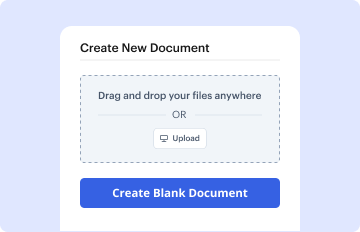
In your dashboard, choose the New Document button > scroll down and hit Create Blank Document. You’ll be redirected to the editor.

Step 4: Arrange the view of the document.

Use the Page Controls icon indicated by the arrow to toggle between two page views and layouts for more flexibility.

Step 5: Start adding fields to design the dynamic District Court Document.

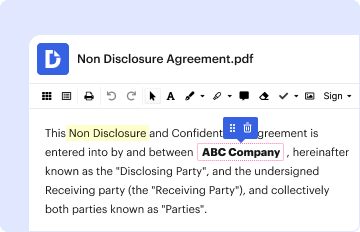
Use the top toolbar to place document fields. Insert and arrange text boxes, the signature block (if applicable), embed images, etc.

Step 6: Prepare and configure the incorporated fields.

Arrange the fillable areas you incorporated based on your desired layout. Adjust each field's size, font, and alignment to ensure the form is straightforward and neat-looking.

Step 7: Finalize and share your template.

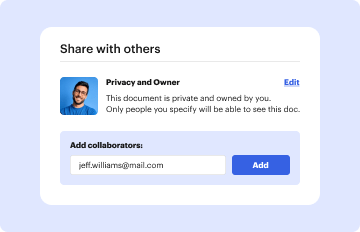
Save the finalized copy in DocHub or in platforms like Google Drive or Dropbox, or create a new District Court Document. Distribute your form via email or use a public link to reach more people.

be ready to get more

Build your District Court Document in minutes

Start creating now

Got questions?

We have answers to the most popular questions from our customers. If you can't find an answer to your question, please contact us.
Contact us
Do it yourself Do it yourself / Full name
In the federal system, 94 district courts are organized into 12 circuits, or regions. Each circuit has its own Court of Appeals that reviews cases decided in U.S. District Courts within the circuit.
New York has four federal district courts, which are the U.S. District Courts for the Northern, Southern, Eastern, and Western Districts of New York. Judges on these courts must be nominated by the U.S. President and confirmed by the U.S. Senate. They serve lifetime terms.
Each state contains one or more U.S. District Courts, or trial courts. Additionally, the states are grouped into thirteen circuits, with each circuit assigned an intermediate appellate court, called a U.S. Court of Appeal. Additionally, there is a bankruptcy court for each district court.
You should submit a request for court records directly to the Clerk of the Court or the County Clerk that possesses those records.
be ready to get more

Build your District Court Document in minutes

Start creating now

Related Q&A to District Court Document

The United States District Court for the Southern District of New York encompasses the counties of New York, Bronx, Westchester, Rockland, Putnam, Orange, Dutchess, and Sullivan and draws jurors from those counties. The Court hears cases in Manhattan, White Plains, and Poughkeepsie, New York.
DIY Forms are free and easy guided step by step computer programs that ask the litigant a series of questions then use the answers to prepare personalized court forms that are ready to serve and file. Some programs identify issues and produce information sheets.
Learn more about the different types of federal courts. Supreme Court. The Supreme Court is the highest court in the United States. Courts of Appeals. There are 13 appellate courts that sit below the U.S. Supreme Court, and they are called the U.S. Courts of Appeals. District Courts. Bankruptcy Courts. Article I Courts.

Additional resources on building your forms