
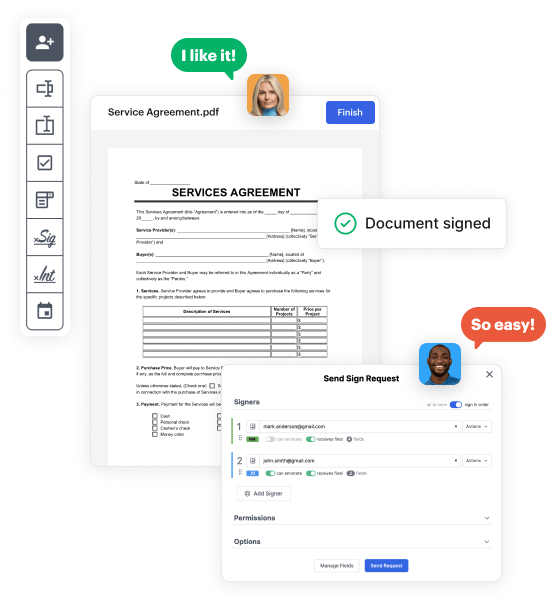
Create your Defendant's Legal Form from scratch

Start Building Now
Title decoration

Here's how it works

01. Start with a blank Defendant's Legal Form
Open the blank document in the editor, set the document view, and add extra pages if applicable.
02. Add and configure fillable fields
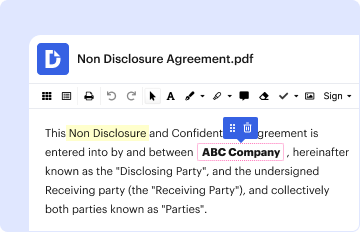
Use the top toolbar to insert fields like text and signature boxes, radio buttons, checkboxes, and more. Assign users to fields.
03. Distribute your form
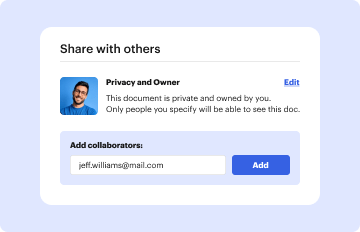
Share your Defendant's Legal Form in seconds via email or a link. You can also download it, export it, or print it out.

A brief guide on how to create a polished Defendant's Legal Form

Form edit decoration

Step 1: Log in to DocHub to begin creating your Defendant's Legal Form.

First, sign in to your DocHub account. If you don't have one, you can simply register for free.

Step 2: Head to the dashboard.

Once you’re in, go to your dashboard. This is your central hub for all document-based tasks.

Step 3: Kick off new document creation.

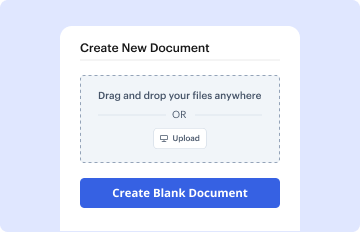
In your dashboard, select New Document in the upper left corner. Hit Create Blank Document to create the Defendant's Legal Form from a blank slate.

Step 4: Add form elements.

Add numerous elements like text boxes, images, signature fields, and other options to your form and assign these fields to particular recipients as necessary.

Step 5: Customize your form.

Customize your document by adding walkthroughs or any other crucial information using the text option.

Step 6: Review and adjust the form.

Thoroughly go over your created Defendant's Legal Form for any typos or essential adjustments. Take advantage of DocHub's editing capabilities to enhance your form.

Step 7: Send out or download the form.

After completing, save your file. You can select to save it within DocHub, transfer it to various storage options, or send it via a link or email.


be ready to get more

Build your Defendant's Legal Form in minutes

Start creating now

Got questions?

We have answers to the most popular questions from our customers. If you can't find an answer to your question, please contact us.
Contact us
A brief is a partys written description of the facts in the case, the law that applies, and the partys argument about the issues on appeal.
□ File the Answer. Service to the Clerks Office at the federal courthouse where the Judge for your case is located. The Clerk will take the original and one copy. The other copy is for you to keep after it is stamped by the Clerk.
The word brief has two general meanings in legal parlance. As a noun it can be the written argument a lawyer files with a court in support of his or her clients case. As a verb (as used here), briefing the decision means to prepare a short summary of the courts written decision in a case.
There are several types of pleadings in civil litigation. These include complaints, which serve as the basis of the legal action, and answers, which are the responses to the complaints. There may also be counterclaims, crossclaims, and third-party claims, which are also types of pleadings.
(1) Pleading means a petition, complaint, application, objection, answer, response, notice, request for orders, statement of interest, report, or account filed in proceedings under the Family Code.
be ready to get more

Build your Defendant's Legal Form in minutes

Start creating now

Related Q&A to Defendant's Legal Form

Pleadings: Written statements filed with the court that describe a partys legal or factual assertions about the case. Pleadings may include a complaint, an answer, a motion, or a brief.

Additional resources on building your forms