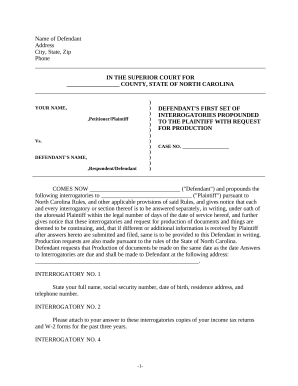
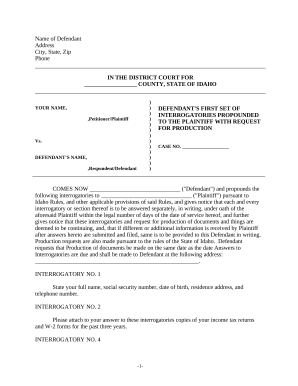
Get and manage Defendant to Plaintiff Forms online

Improve your file management with the Defendant to Plaintiff Forms library with ready-made document templates that suit your needs. Access your form template, edit it, complete it, and share it with your contributors without breaking a sweat. Begin working more efficiently with the forms.

The best way to use our Defendant to Plaintiff Forms:

  1. Open our Defendant to Plaintiff Forms and look for the form you need.
  2. Preview your form to ensure it’s what you want, and click Get Form to start working on it.
  3. Edit, include new text, or point out important information with DocHub tools.
  4. Fill out your form and save the modifications.
  5. Download or share your document template with other people.

Examine all of the possibilities for your online file administration with our Defendant to Plaintiff Forms. Get a free free DocHub account right now!


Video Guide on Defendant to Plaintiff Forms management

video background

Commonly Asked Questions about Defendant to Plaintiff Forms

common count: a claim for money owed. complaint: Papers filed with the court by a plaintiff to start a lawsuit. A complaint sets out facts and legal claims (called causes of action). In some types of cases, it is called a petition.
The first document filed in a lawsuit is usually a pleading called a complaint or a petition. Its essential in various types of cases. The complaint is a detailed document laying the groundwork for a civil action.
(In the trial court, the first name listed is the plaintiff, the party bringing the suit. The name following the v is the defendant. If the case is appealed, as in this example, the name of the petitioner (appellant) is usually listed first, and the name of the respondent (appellee) is listed second.
The document that is filed with the court to state the position of the plaintiff or the defendant in a lawsuit and ask for relief from the court is called a pleading.
answer: a defendants response to a plaintiffs initial court filing (called a complaint or petition). An answer normally denies some or all of the facts in the complaint and sometimes includes allegations or charges against a plaintiff, called a cross-complaint. It may also include affirmative defenses.
A lawsuit begins when the person bringing the suit files a complaint. This first step begins what is known as the pleadings stage of the suit. Pleadings are certain formal documents filed with the court that state the parties basic positions. Common pre-trial pleadings include: Complaint (or petition or bill).
Information for Plaintiffs/Petitioners When you file a lawsuit, you will usually file a petition or a complaint. You also will almost always need a summons. And, in most civil cases, you will need a Civil Case Cover Sheet (Form CM-010).
An answer is a reply to a question or a solution to a problem. In law, an answer refers to a defendants first formal written statement to a plaintiffs initial petition or complaint. This opening written statement will admit or deny the allegations, or demand more information about the claims of wrongdoing.