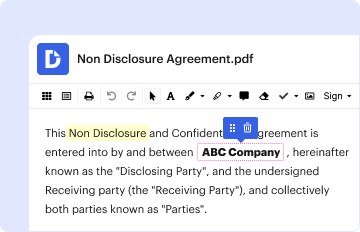
Create your Deed of Trust Legal Form from scratch

Start Building Now
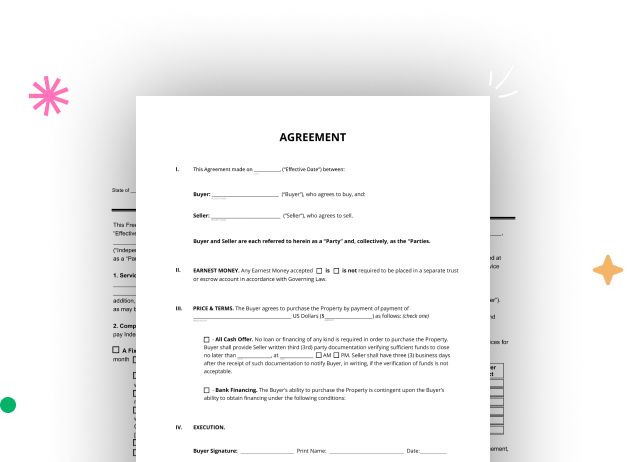
Title decoration

Here's how it works

01. Start with a blank Deed of Trust Legal Form
Open the blank document in the editor, set the document view, and add extra pages if applicable.
02. Add and configure fillable fields
Use the top toolbar to insert fields like text and signature boxes, radio buttons, checkboxes, and more. Assign users to fields.
03. Distribute your form
Share your Deed of Trust Legal Form in seconds via email or a link. You can also download it, export it, or print it out.

A brief tutorial on how to set up a polished Deed of Trust Legal Form
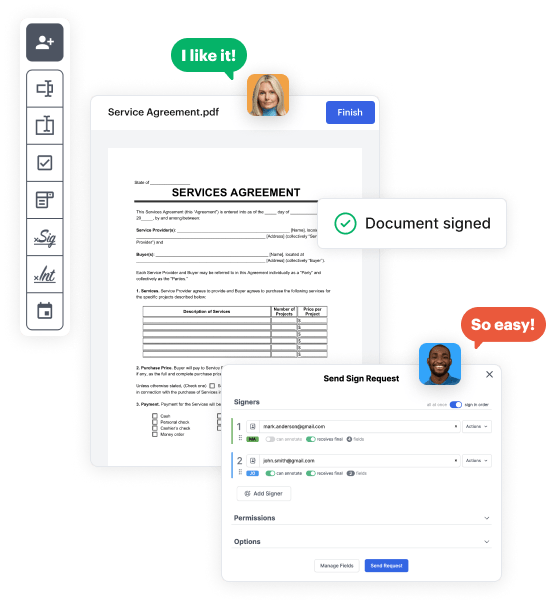
Form edit decoration

Step 1: Log in to DocHub to create your Deed of Trust Legal Form.

First, sign in to your DocHub account. If you don't have one, you can simply register for free.

Step 2: Navigate to the dashboard.

Once you’re in, navigate to your dashboard. This is your main hub for all document-based processes.

Step 3: Start new document creation.

In your dashboard, choose New Document in the upper left corner. Opt for Create Blank Document to create the Deed of Trust Legal Form from the ground up.

Step 4: Incorporate template fillable areas.

Place different fields like text boxes, photos, signature fields, and other elements to your template and assign these fields to intended users as required.

Step 5: Personalize your form.

Customize your template by incorporating instructions or any other essential tips using the text feature.

Step 6: Review and adjust the form.

Meticulously go over your created Deed of Trust Legal Form for any discrepancies or needed adjustments. Make use of DocHub's editing capabilities to fine-tune your form.

Step 7: Distribute or download the form.

After finalizing, save your file. You can opt to keep it within DocHub, transfer it to various storage services, or forward it via a link or email.


be ready to get more

Build your Deed of Trust Legal Form in minutes

Start creating now

Got questions?

We have answers to the most popular questions from our customers. If you can't find an answer to your question, please contact us.
Contact us
A deed of trust, also called a trust deed, is the functional equivalent of a mortgage. It does not transfer the ownership of real property, as the typical deed does. Like a mortgage, a trust deed makes a piece of real property security (collateral) for a loan.
How to get a Deed of Trust The borrower, lender, and trustees names and addresses. The property address. The amount being borrowed. The interest rate. The interest adjustment date. The frequency of principal and interest payments. The payment amounts and due dates. The due date of the final payment.
Trusts may be declared upon registered land, or upon any interest therein, by deed or other instrument in writing, fully and clearly defining the trusts, conditions, and limitations, and the powers and duties of the trustee and giving his name, residence, and post-office address and the name, residence, and post-office
The disadvantages of protected trust deeds are: paying regular contributions you will have to pay contributions towards your debts for at least 4 years. credit rating having a trust deed will affect your credit rating for 6 years from the date the trust deed begins.
In California, there are three steps to getting a copy of a trust document: Make a written demand for a copy of the Trust and its amendments, if any; Wait 60 days; and. If you do not receive a copy of the Trust within 60 days of making your written demand, file a petition with the probate court.
be ready to get more

Build your Deed of Trust Legal Form in minutes

Start creating now

Related Q&A to Deed of Trust Legal Form

Contact a licensed Insolvency Practitioner (IP). Your money adviser might be able to recommend one to you. Theyre the only people who can arrange a trust deed and theyll be your trustee. The trustee is someone qualified to manage your trust deed.
The Deed of Trust must be in writing, signed by the property owner, and filed in the County Clerk property records. The Deed of Trust should describe the loan amount, name a Trustee, and describe the collateral securing the loan. A correct legal description of the property is essential for a valid Deed of Trust.
What is the Difference Between a Deed and a Deed of Trust? The primary difference between a deed and a deed of trust is the purpose of each document. A deed transfers ownership of a property from one party to another, while a deed of trust secures a loan on a property.

Additional resources on building your forms