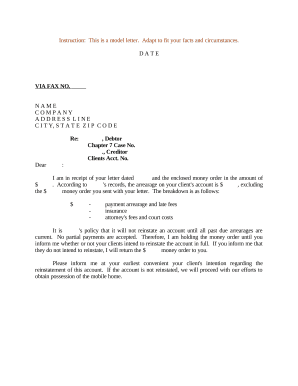
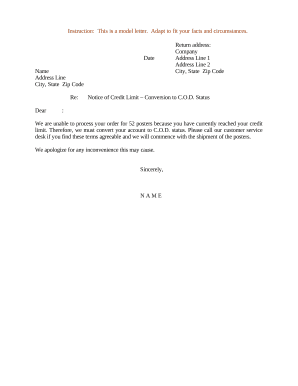
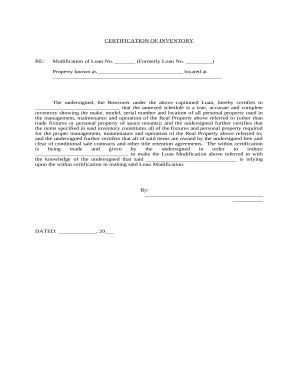
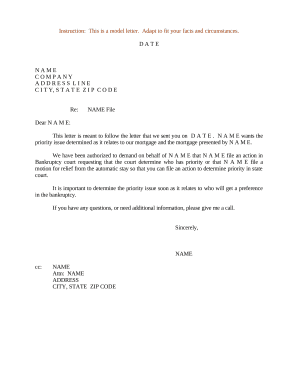
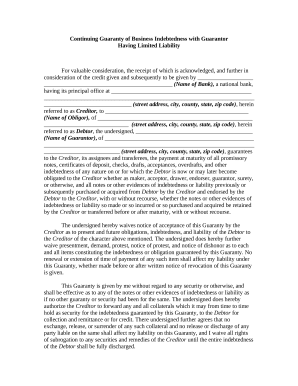
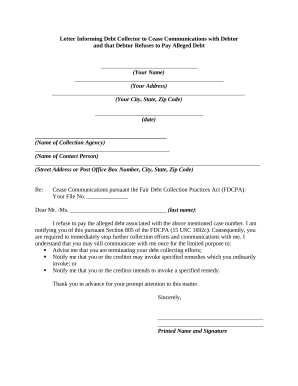
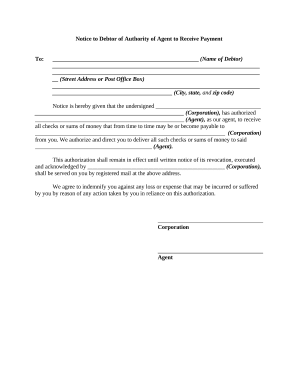
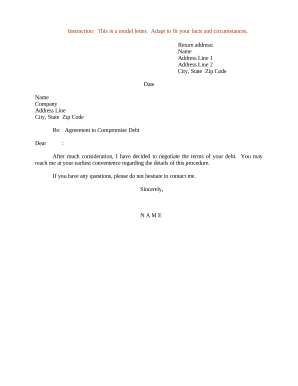
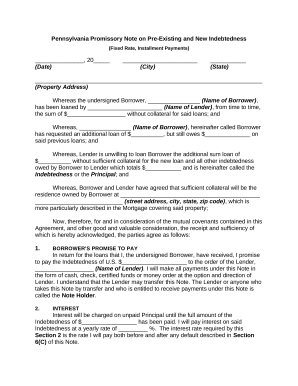
Get and handle Debt Management Forms online

Boost your form operations with the Debt Management Forms collection with ready-made form templates that suit your needs. Access the form, edit it, fill it, and share it with your contributors without breaking a sweat. Begin working more efficiently with the documents.

The best way to manage our Debt Management Forms:

  1. Open our Debt Management Forms and look for the form you need.
  2. Preview your form to ensure it’s what you want, and click Get Form to begin working on it.
  3. Change, add new text, or point out important information with DocHub features.
  4. Complete your form and save the modifications.
  5. Download or share your document with other recipients.

Examine all of the opportunities for your online file management with our Debt Management Forms. Get a free free DocHub account today!


Video Guide on Debt Management Forms management

video background

Commonly Asked Questions about Debt Management Forms

There are specific steps to a debt management plan that all must be followed with care to make it work: Create a spreadsheet. Determine a debt management strategy. Negotiate lower interest rates. Limit expenses. Track your progress and monitor your credit report.
You can set up your DMP yourself. But, you have to: Manage your own payments. Contact everyone you owe yourself.
You can hire a debt settlement company who will negotiate with your creditor for a fee, or you can cut out the middleman and do it yourself. Debt settlement is commonly used when the borrower can no longer afford the high interest on credit card debt, coupled with the amount owed.
PayPlan dont charge any fees for setting up or managing your debt management plans as we are funded by the credit industry, so 100% of the money you pay goes towards repaying your debts.
However, you need to be sure you understand the impact a DMP will have: it may take longer to pay back your debt because youll be paying less each month. your creditors wont necessarily freeze the interest and charges on your debts, so the amount you owe might go down by less than you think.
Instead of paying a company to talk to creditors on your behalf, you can try to settle your debt yourself. If your debts are overdue the creditor may be willing to negotiate with you. They might even agree to accept less than what you owe.
Create a Plan of Attack Prioritize Your Debts. Rearrange your debts in order of which one youd like to tackle first. Focus on a Single Debt. Figure out your expenses. Go for the big wins. Go for the easy wins. Set up auto-pay. Make extra payments. See if you can move the payment due dates.