

Create your Creditors Legal Form from scratch

Start Building Now
Title decoration

Here's how it works

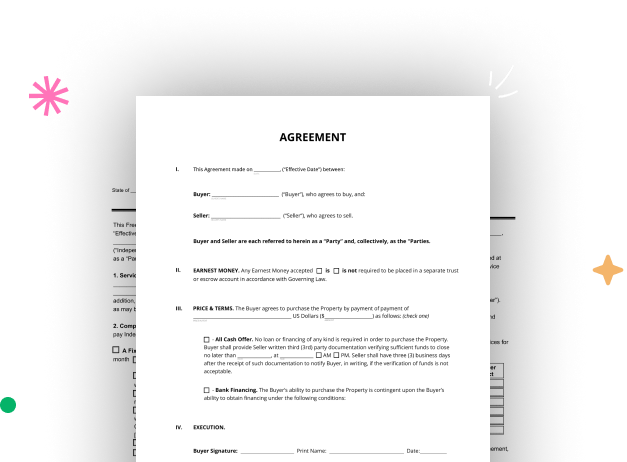
01. Start with a blank Creditors Legal Form
Open the blank document in the editor, set the document view, and add extra pages if applicable.
02. Add and configure fillable fields
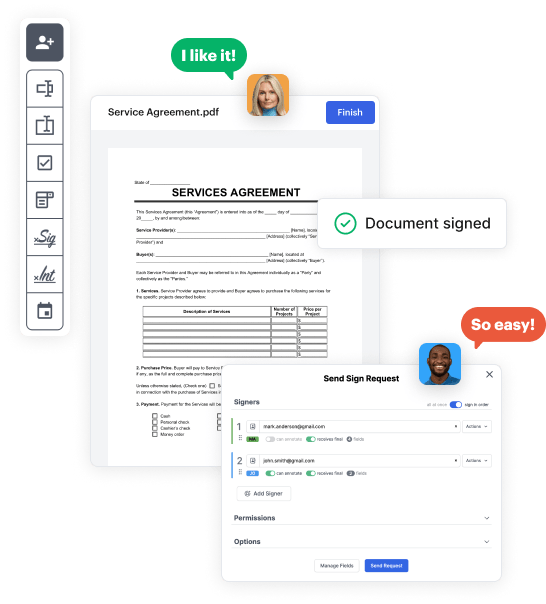
Use the top toolbar to insert fields like text and signature boxes, radio buttons, checkboxes, and more. Assign users to fields.
03. Distribute your form
Share your Creditors Legal Form in seconds via email or a link. You can also download it, export it, or print it out.

Design your Creditors Legal Form in a matter of minutes

Form edit decoration

Step 1: Access DocHub to build your Creditors Legal Form.

Start signining into your DocHub account. Utilize the pro DocHub functionality at no cost for 30 days.

Step 2: Go to the dashboard.

Once logged in, go to the DocHub dashboard. This is where you'll create your forms and manage your document workflow.

Step 3: Design the Creditors Legal Form.

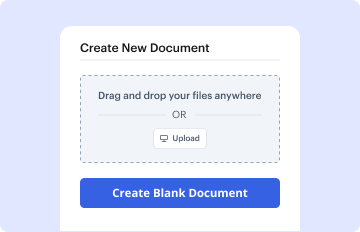
Hit New Document and select Create Blank Document to be taken to the form builder.

Step 4: Set up the form layout.

Use the DocHub toolset to insert and arrange form fields like text areas, signature boxes, images, and others to your document.

Step 5: Add text and titles.

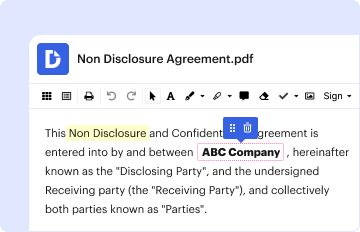
Include needed text, such as questions or instructions, using the text field to guide the users in your form.

Step 6: Configure field properties.

Alter the properties of each field, such as making them compulsory or formatting them according to the data you expect to collect. Assign recipients if applicable.

Step 7: Review and save.

After you’ve managed to design the Creditors Legal Form, make a final review of your document. Then, save the form within DocHub, transfer it to your preferred location, or share it via a link or email.


be ready to get more

Build your Creditors Legal Form in minutes

Start creating now

Got questions?

We have answers to the most popular questions from our customers. If you can't find an answer to your question, please contact us.
Contact us
Like Schedule D, Schedules E and F require the debtor, with respect to each claim, to indicate whether such claims are contingent, unliquidated, or disputed by the debtor (and therefore subject to challenge on those bases). Schedule G lists all executory contracts and unexpired leases to which the debtor is a party.
An unsecured creditor is a creditor that can claim monies that they are owed from a company only after secured creditors have done so. They rank above shareholders, but will only receive an amount of money that is deemed available through the prior sale of assets and after the secured creditors claims.
Official Form 106E/F. Schedule E/F: Creditors Who Have Unsecured Claims. Be as complete and accurate as possible. Use Part 1 for creditors with PRIORITY claims and Part 2 for creditors with NONPRIORITY claims. List the other party to any executory contracts or unexpired leases that could result in a claim.
An unsecured claim is a payment request made to the bankruptcy court by a creditor who doesnt have the right to sell property to satisfy the underlying debt. Credit card companies, medical providers, and utility companies often file unsecured claims.
Unsecured Debt - If you simply promise to pay someone a sum of money at a particular time, and you have not pledged any real or personal property to collateralize the debt, the debt is unsecured.
be ready to get more

Build your Creditors Legal Form in minutes

Start creating now

Related Q&A to Creditors Legal Form

Official Form 309C (For Corporations or Partnerships) Notice of Chapter 7 Bankruptcy Case - No Proof of Claim Deadline.
Official Form 309F1 (For Corporations or Partnerships) Notice of Chapter 11 Bankruptcy Case.
Compile List of Known Creditors First and foremost, write down the creditors that you actually do know. Next, collect all of the bills at your home. If you know that you are filing, be sure not to throw any new bills away. Add these bills to the list of creditors that you already started.

Additional resources on building your forms