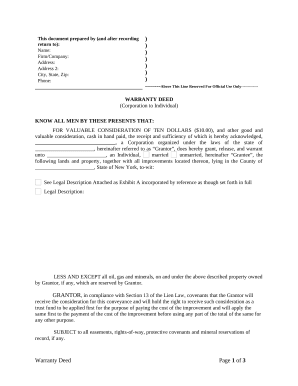
Supercharge your work productivity with Corporate Warranty Deeds

Papers managing occupies to half of your office hours. With DocHub, you can reclaim your time and effort and boost your team's productivity. Get Corporate Warranty Deeds category and check out all document templates related to your day-to-day workflows.

Effortlessly use Corporate Warranty Deeds:

  1. Open Corporate Warranty Deeds and utilize Preview to get the relevant form.
  2. Click Get Form to begin working on it.
  3. Wait for your form to open in the online editor and start modifying it.
  4. Add new fillable fields, icons, and images, change pages order, etc.
  5. Fill your document or set it for other contributors.
  6. Download or share the form by link, email attachment, or invite.

Speed up your day-to-day file managing with our Corporate Warranty Deeds. Get your free DocHub account today to discover all templates.


Video Guide on Corporate Warranty Deeds management

video background

Commonly Asked Questions about Corporate Warranty Deeds

Key Takeaways. A warranty deed protects the buyer and ensures that the seller holds a free and clear title to a property without any outstanding liens or mortgages. A warranty deed is a legal real estate document and protects the buyer against future claims to the title of the property.
A deed transferring title and legal interest in real property from the grantor to the grantee with full covenants and warranties.
A general warranty deed is a promise from the grantor that they own the property absolutely, they are granting that ownership to the grantee, and that there are no encumbrances (easements, restrictions, liens, etc.) other than the ones expressly listed in the deed.
No, a warranty deed does not prove ownership. A title search is the best way to prove that a grantor rightfully owns a property. The warranty deed is a legal document that offers the buyer protection. In other words, the property title and warranty deed work in tandem together.
Both a warranty deed and deed of trust are used to transfer the title of a property from one person to another. However, the difference between these two contracts is who is protected. As you now know, a deed of trust protects the beneficiary (lender). A warranty deed, on the other hand, protects the property owner.
A general warranty deed is the most common type of deed used for transferring real estate. It basically promises that: not only does the seller have good and proper title to sell the property, but all the prior owners also had good title, thus making a complete chain of ownership; and.
A warranty deed in Florida transfers ownership of real estate with full warranty of title. A warranty deed guarantees that the purchaser receives good and valid title to the property.