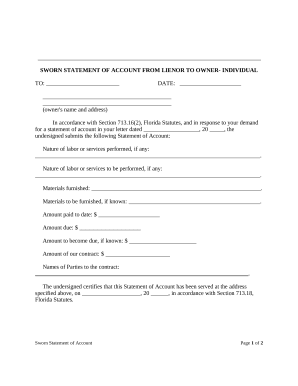
Enhance your template management with Construction Dispute Resolution Forms

Your workflows always benefit when you can discover all the forms and documents you need on hand. DocHub provides a vast array of document templates to ease your daily pains. Get a hold of Construction Dispute Resolution Forms category and easily discover your document.

Start working with Construction Dispute Resolution Forms in a few clicks:

  1. Gain access to Construction Dispute Resolution Forms and find the form you need.
  2. Click Get Form to open it in the editor.
  3. Begin modifying your form: add fillable fields, highlight paragraphs, or blackout sensitive information.
  4. The app saves your modifications automatically, and once you are all set, you are able to download or distribute your file with other contributors.

Enjoy effortless record managing with DocHub. Check out our Construction Dispute Resolution Forms collection and get your form right now!


Video Guide on Construction Dispute Resolution Forms management

video background

Commonly Asked Questions about Construction Dispute Resolution Forms

It involves processes and techniques of conflict resolution without litigation and empowers parties to work together using a framework to amicably settle complex issues. The most common ADR methods are negotiation, mediation, conciliation, arbitration, and private judging.
In a 2023 Harvard Business Review article, Catherine Cote broke down the Thomas-Kilmann Conflict Model, which highlights five conflict resolution strategies: avoiding, competing, accommodating, compromising, and collaborating.
It is often the case that parties to a construction dispute will first attempt to mediate or negotiate a resolution of their dispute or differences. Mediations are often conducted in one or two days and is a very informal process which means that the cost and time away from a project will be minimal.
Heres a review of the three basic types of dispute resolution to consider: Mediation. The goal of mediation is for a neutral third party to help disputants come to a consensus on their own. Arbitration. In arbitration, a neutral third party serves as a judge who is responsible for resolving the dispute. Litigation.
Types of ADR include arbitration, mediation, negotiated rulemaking, neutral factfinding, and minitrials. With the exception of binding arbitration, the goal of ADR is to provide a forum for the parties to work toward a voluntary, consensual agreement, as opposed to having a judge or other authority decide the case.
Construction disputes can stem from a variety of factors, including inadequate project documentation, poor communication, unforeseen site conditions, design errors, unrealistic project expectations, changes in project scope, and economic pressures.
Arbitration is the method contractors and lawyers prefer when it comes to dispute resolution. Most contractors list it as the way to address disputes in contractual terms. If the parties opt for arbitration, they must choose a neutral third party with the relevant experience to bring them to an amicable solution.
This article will discuss four standard dispute resolution methods: arbitration, mediation, conciliation, and negotiation. Each has its advantages and disadvantages, but they all serve to resolve disputes in a manner that is more flexible than the court system.