Improve your document administration with Construction Contractual Agreements

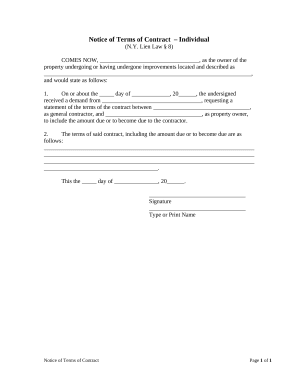
Your workflows always benefit when you can easily get all the forms and files you require at your fingertips. DocHub supplies a wide array of templates to ease your day-to-day pains. Get hold of Construction Contractual Agreements category and quickly browse for your form.

Begin working with Construction Contractual Agreements in several clicks:

  1. Browse Construction Contractual Agreements and get the form you require.
  2. Click on Get Form to open it in the editor.
  3. Begin modifying your form: add fillable fields, highlight sentences, or blackout sensitive information and facts.
  4. The app saves your changes automatically, and after you are all set, you are able to download or distribute your file with other contributors.

Enjoy smooth file managing with DocHub. Explore our Construction Contractual Agreements collection and get your form right now!


Video Guide on Construction Contractual Agreements management

video background

Commonly Asked Questions about Construction Contractual Agreements

Here are four main construction contracts to choose from, plus their pros and cons: Lump-Sum Contracts. Cost-Plus-Fee Contracts. Guaranteed Maximum Price Contracts. Unit-Price Contracts.
A contractual agreement is also simply known as contract. A contractual agreement is a legally-binding agreement entered into by two or more parties. The phrases Contract and Contractual Agreement are often used interchangeably, along with Agreement.
The basic elements required for the agreement to be a legally enforceable contract are: mutual assent, expressed by a valid offer and acceptance; adequate consideration; capacity; and legality. In some states, elements of consideration can be satisfied by a valid substitute.
Common types of contracts Lease contract. A lease contract outlines the terms of renting a property between a landlord and tenant. Employment contract. Residential room contract. House purchase and sale contract. Personal loan contract. Business service contract. Investor contract. Non-disclosure agreement.
A comprehensive guide on how to draft a contract Know your parties. Agree on the terms. Set clear boundaries. Spell out the consequences. Specify how you will resolve disputes. Cover confidentiality. Check the legality of the contract. Open it up to negotiation.
Some of the most popular contracts include fixed-price contracts, cost-plus contracts, and time and materials contracts. While you can use software and other tools to help you generate professional agreements, you should still understand the basics of different types of contracts as a business owner.
To that end, before you sign anything and start working, make sure your contract has these 5 key elements. A Detailed Scope of Work. Project Cost and Payment Schedule. Construction Timeline. Change Order Process. Project Issues and Dispute Resolution.
Bilateral Contracts: Bilateral contracts are agreements in which both parties exchange mutual promises to perform certain obligations, making this type of contract the most common in business transactions.