


Create your Connecticut Estate Planning from scratch

Start Building Now
Title decoration

Here's how it works

01. Start with a blank Connecticut Estate Planning
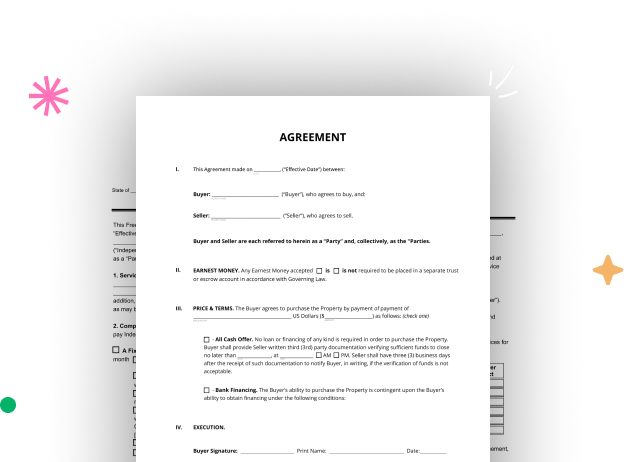
Open the blank document in the editor, set the document view, and add extra pages if applicable.
02. Add and configure fillable fields
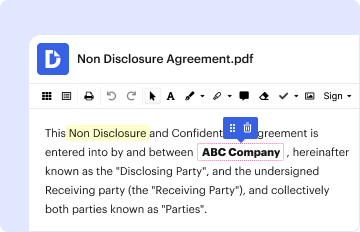
Use the top toolbar to insert fields like text and signature boxes, radio buttons, checkboxes, and more. Assign users to fields.
03. Distribute your form
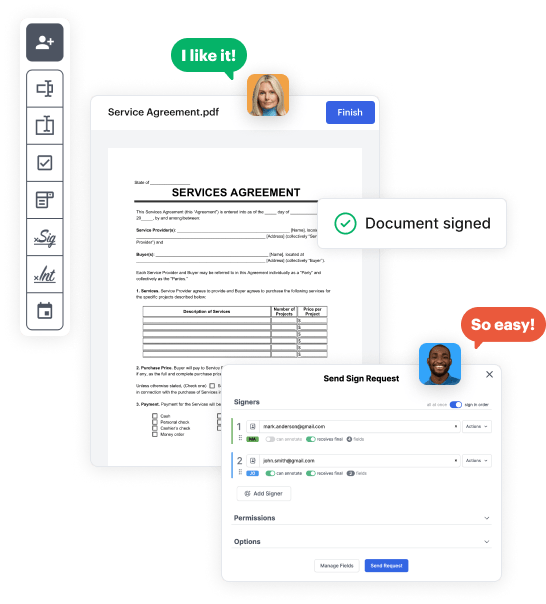
Share your Connecticut Estate Planning in seconds via email or a link. You can also download it, export it, or print it out.

A detailed walkthrough of how to design your Connecticut Estate Planning online

Form edit decoration

Step 1: Start with DocHub's free trial.

Visit the DocHub website and register for the free trial. This provides access to every feature you’ll require to build your Connecticut Estate Planning without any upfront cost.

Step 2: Navigate to your dashboard.

Sign in to your DocHub account and proceed to the dashboard.

Step 3: Craft a new document.

Hit New Document in your dashboard, and choose Create Blank Document to create your Connecticut Estate Planning from scratch.

Step 4: Use editing tools.

Place various fields such as text boxes, radio buttons, icons, signatures, etc. Organize these elements to suit the layout of your form and designate them to recipients if needed.

Step 5: Organize the form layout.

Organize your form easily by adding, repositioning, removing, or combining pages with just a few clicks.

Step 6: Create the Connecticut Estate Planning template.

Turn your freshly crafted form into a template if you need to send multiple copies of the same document numerous times.

Step 7: Save, export, or share the form.

Send the form via email, share a public link, or even publish it online if you wish to collect responses from a broader audience.


be ready to get more

Build your Connecticut Estate Planning in minutes

Start creating now

Got questions?

We have answers to the most popular questions from our customers. If you can't find an answer to your question, please contact us.
Contact us
Is that OK? While Connecticut law requires that a living will must have two witnesses, notarization is not required.
Do I Need to Have My Will docHubd in Connecticut? No, in Connecticut, you dont need to docHub your will to make it legal. However, Connecticut allows you to make your will self-proving and youll need to go to a notary if you want to do that.
Key Takeaways Common estate planning documents are wills, trusts, powers of attorney, and living wills.
In the state of Connecticut, the minimum value of the deceaseds assets is $40,000. When accessing the total value of the estate, you may only include the assets and property that must go through probateand exclude and assets or property that was jointly owned or held in trust.
The basic requirements for a Connecticut last will and testament include the following: Age: The testator must be at least 18 years old. Capacity: The testator must be of sound mind. Signature: The will must be signed by the testator.
be ready to get more

Build your Connecticut Estate Planning in minutes

Start creating now

Related Q&A to Connecticut Estate Planning

Handwritten Will: A handwritten or holographic will is one entirely written and signed by the testator without witnesses. Connecticut does not accept holographic wills of this type. But the will is valid if a will is handwritten and signed in front of two witnesses ing to state law.
That means, you cant just verbally tell folks how you want your property to pass, even in an emergency situation as you can in some states. For example, in New York, an oral will is valid if made by a service member in armed conflict. A handwritten or holographic will isnt valid in Connecticut.

Additional resources on building your forms


