
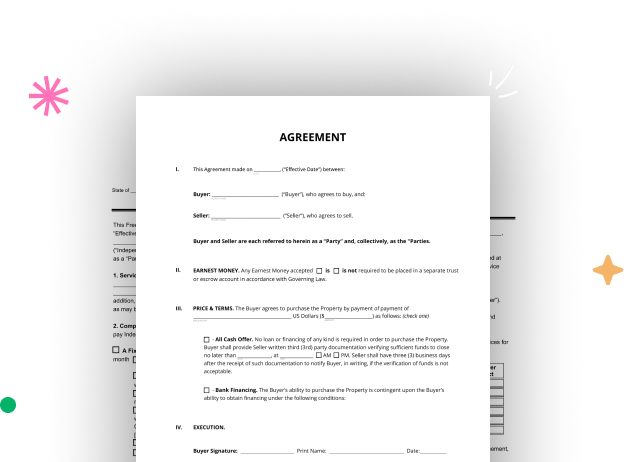



Create your Concrete Masonry Legal Form from scratch

Start Building Now
Title decoration

Here's how it works

01. Start with a blank Concrete Masonry Legal Form
Open the blank document in the editor, set the document view, and add extra pages if applicable.
02. Add and configure fillable fields
Use the top toolbar to insert fields like text and signature boxes, radio buttons, checkboxes, and more. Assign users to fields.
03. Distribute your form
Share your Concrete Masonry Legal Form in seconds via email or a link. You can also download it, export it, or print it out.

A detailed guide on how to design your Concrete Masonry Legal Form online

Form edit decoration

Step 1: Start with DocHub's free trial.

Navigate to the DocHub website and sign up for the free trial. This provides access to every feature you’ll require to build your Concrete Masonry Legal Form with no upfront cost.

Step 2: Navigate to your dashboard.

Sign in to your DocHub account and proceed to the dashboard.

Step 3: Craft a new document.

Hit New Document in your dashboard, and select Create Blank Document to create your Concrete Masonry Legal Form from the ground up.

Step 4: Utilize editing tools.

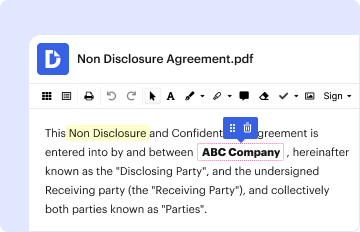
Add different elements such as text boxes, radio buttons, icons, signatures, etc. Organize these fields to suit the layout of your form and assign them to recipients if needed.

Step 5: Organize the form layout.

Organize your form easily by adding, moving, removing, or combining pages with just a few clicks.

Step 6: Create the Concrete Masonry Legal Form template.

Turn your newly crafted form into a template if you need to send multiple copies of the same document numerous times.

Step 7: Save, export, or distribute the form.

Send the form via email, distribute a public link, or even post it online if you aim to collect responses from a broader audience.


be ready to get more

Build your Concrete Masonry Legal Form in minutes

Start creating now

Got questions?

We have answers to the most popular questions from our customers. If you can't find an answer to your question, please contact us.
Contact us
Instructions Create a Trench. Use a trenching machine or a trenching shovel to dig down below the frost level for your area. Pour the Concrete. Snap the Chalk Line. Establish Two Leads. Mix the Mortar. Lay the Mortar Base. Lay the Cinder Block Leads. Fill the Bottom Course.
The Code (TMS 402) covers the design and construction of masonry structures while the Specification (TMS 602) is concerned with minimum construction requirements for masonry in structures. The new 2022 edition has been updated throughout for new referenced standards, including ASCE/SEI 7-22 and numerous ASTM Standards.
The purpose of the concrete masonry checkoff is to: Strengthen the position of the domestic Concrete Masonry Products industry. Maintain, develop and expand domestic markets for Concrete Masonry Products. Promote the use of Concrete Masonry Products in construction and building.
A CMU is constructed from two principal materials Portland cement and aggregates such as sand and crushed stone. The aggregates form the blocks main structure, while the cement binds the aggregates together.
Typically, concrete masonry units have nominal face dimensions of 8 in. (203 mm) by 16 in. (406 mm), available in nominal thicknesses of 4, 6, 8, 10, 12, 14, and 16 in. (102, 152, 203, 254, 305, 356, and 406 mm).
be ready to get more

Build your Concrete Masonry Legal Form in minutes

Start creating now

Related Q&A to Concrete Masonry Legal Form

If youre planning to build a wall on top of a concrete slab, youll need to use a specific type of fastener to anchor the wall in place. To help you decide which wall fastener to use on concrete, weve outlined all the options that can help you successfully secure wall framing to the slab.
What are the main differences? The main difference is that masonry is the name of a building practice using other materials, while concrete is a type of building material.
Prepare the Materials. Work out how many bricks you are going to need before starting. Mix the Mortar. Create a Foundation. Create a String Line. Lay the Mortar. Start Laying the Bricks. Cut the Bricks for the Second Row. Topping the Wall.

Additional resources on building your forms


