
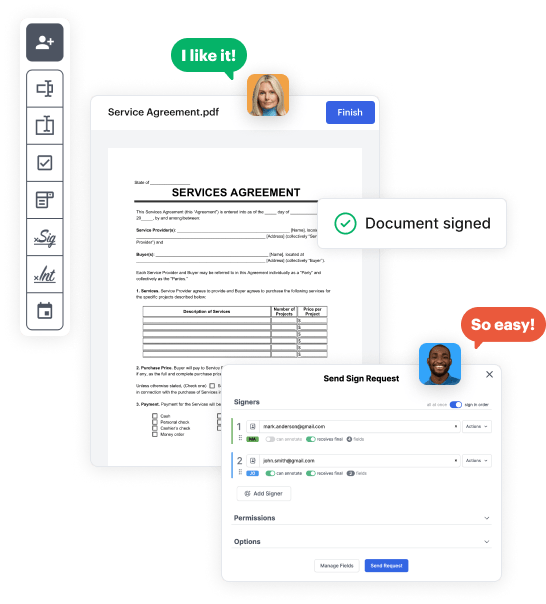
Create your Concrete Mason Contractor Legal Document from scratch

Start Building Now
Title decoration

Here's how it works

01. Start with a blank Concrete Mason Contractor Legal Document
Open the blank document in the editor, set the document view, and add extra pages if applicable.
02. Add and configure fillable fields
Use the top toolbar to insert fields like text and signature boxes, radio buttons, checkboxes, and more. Assign users to fields.
03. Distribute your form
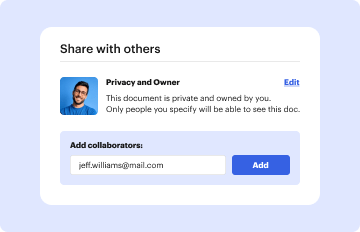
Share your Concrete Mason Contractor Legal Document in seconds via email or a link. You can also download it, export it, or print it out.

Create your Concrete Mason Contractor Legal Document in a matter of minutes

Form edit decoration

Step 1: Access DocHub to set up your Concrete Mason Contractor Legal Document.

Begin by accessing your DocHub account. Utilize the pro DocHub functionality at no cost for 30 days.

Step 2: Go to the dashboard.

Once logged in, go to the DocHub dashboard. This is where you'll build your forms and manage your document workflow.

Step 3: Create the Concrete Mason Contractor Legal Document.

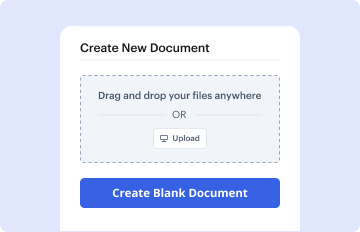
Hit New Document and choose Create Blank Document to be redirected to the form builder.

Step 4: Set up the form layout.

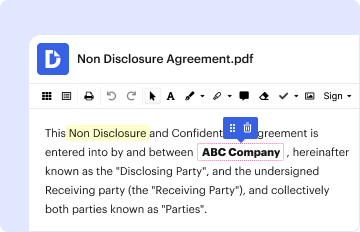
Use the DocHub features to insert and configure form fields like text areas, signature boxes, images, and others to your document.

Step 5: Add text and titles.

Include necessary text, such as questions or instructions, using the text field to lead the users in your form.

Step 6: Configure field properties.

Adjust the properties of each field, such as making them mandatory or arranging them according to the data you plan to collect. Assign recipients if applicable.

Step 7: Review and save.

After you’ve managed to design the Concrete Mason Contractor Legal Document, make a final review of your document. Then, save the form within DocHub, send it to your chosen location, or share it via a link or email.


be ready to get more

Build your Concrete Mason Contractor Legal Document in minutes

Start creating now

Got questions?

We have answers to the most popular questions from our customers. If you can't find an answer to your question, please contact us.
Contact us
Below, you can find a breakdown of the categories of construction documents that construction companies should be aware of: Bidding and Procurement Documents. Bidding and procurement documents help ensure the project owner and general contractor are on the same page. Contract Documents. Project Manuals. Plans and Drawings.
It should detail the work, price, when payments will be made, who gets the necessary building permits, and when the job will be finished. The contract also must identify the contractor, and give their address and license number.
Construction contract It means you promise to do the work specified, and the client promises to pay you the agreed-upon sum. While an estimate is just information, and a proposal can be changed or withdrawn at any time, a contract is binding.
How to Write a Contractor Agreement Outline Services Provided. The contractor agreement should list all services the contractor will provide. Document Duration of the Work. Specify the duration of the working relationship. Outline Payment Terms. Outline Confidentiality Agreement. Consult with a Lawyer.
Construction Contract Documents are the written documents that define the roles, responsibilities, and Work under the construction Contract, and are legally-binding on the parties (Owner and Contractor).
be ready to get more

Build your Concrete Mason Contractor Legal Document in minutes

Start creating now

Related Q&A to Concrete Mason Contractor Legal Document

Elements of a construction contract Name of contractor and contact information. Name of homeowner and contact information. Describe property in legal terms. List attachments to the contract. The cost. Failure of homeowner to obtain financing. Description of the work and the completion date. Right to stop the project.
Once you sign, both you and the contractor are bound by everything set down in the contract. Make sure to get a copy of the contract, and keep it for your records. Always update your contract. Even after you have signed the contract and the work already has begun, you may want to make some changes.
Although a document must be signed by each party to be considered legally binding, the mere presence of signatures does not guarantee that an agreement is enforceable in court. To be considered a legally binding contract or document, three critical elements must also be present: Subject, Consideration, and Capacity.

Additional resources on building your forms