Improve your document management with Complaint Legal Forms

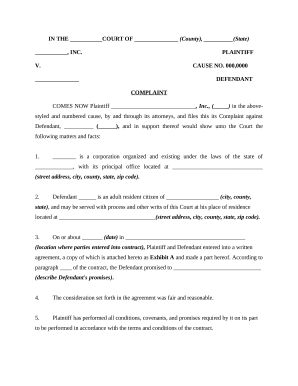
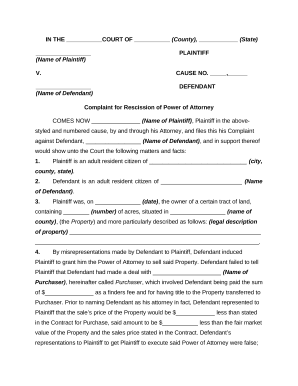
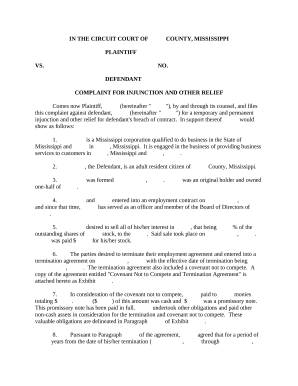
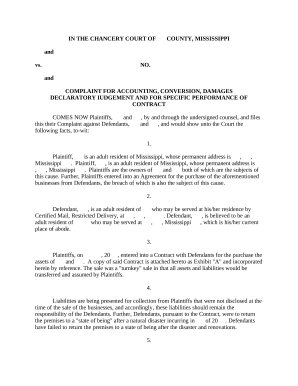
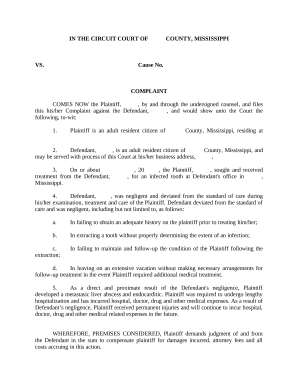
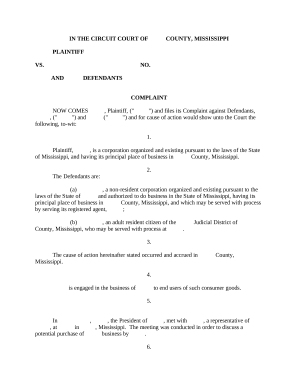
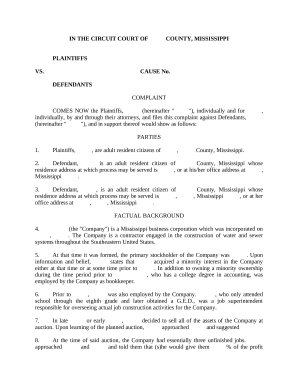
Your workflows always benefit when you can get all the forms and documents you will need on hand. DocHub provides a a huge collection of documents to ease your everyday pains. Get a hold of Complaint Legal Forms category and quickly browse for your document.

Begin working with Complaint Legal Forms in several clicks:

  1. Access Complaint Legal Forms and discover the form you require.
  2. Click Get Form to open it in the editor.
  3. Begin modifying your form: add more fillable fields, highlight sentences, or blackout sensitive facts.
  4. The app saves your adjustments automatically, and once you are ready, you can download or distribute your file with other contributors.

Enjoy effortless form managing with DocHub. Check out our Complaint Legal Forms category and find your form today!


Commonly Asked Questions about Complaint Legal Forms

To win a negligence lawsuit, the injury victim must establish four elements: 1) the defendant owed a duty of care to the victim, 2) they bdocHubed their duty of care, 3) the bdocHub caused the injury, and 4) the victim suffered damages.
The steps to making a professional negligence claim Preliminary Notice. Letter of Claim. Letter of Acknowledgment. Investigations. Letter of Response and Letter of Settlement. Alternative Dispute Resolution.
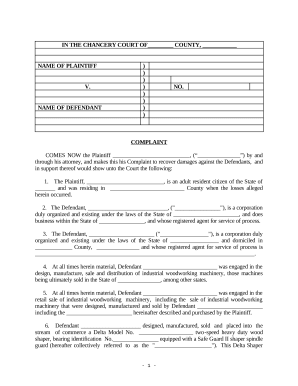
STEP 1: Fill out the Complaint (Form A) STEP 2: Fill out the Civil Case Information Statement (CIS) STEP 3: Make a check or money order payable to Treasurer, State of New Jersey in the. STEP 4: Check your completed forms and make copies. STEP 5: Mail or deliver the forms to the court.
How to Draft a Civil Complaint for Negligence Introduction. Begin your complaint by creating a compelling introduction that provides essential context for the legal action. Factual Allegations. Elements of Negligence. Concluding Statements. Prayer for Relief. Signature and Verification.
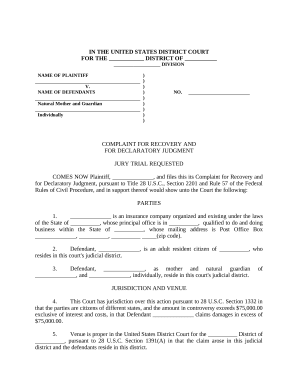
Comply With the Relevant Federal, State, and Local Rules. Research Before Writing. Allege Subject Matter Jurisdiction, Personal Jurisdiction, and Venue. Jurisdiction. Draft Concise and Plain Statement of the Facts. Factual Allegations. Draft Separate Counts for Each Legal Claim. Plead Facts With Particularity Where Necessary.
This article will provide you with essential tips to ensure that, in any legal context, your complaint: (1) complies with the relevant federal, state, and local rules; (2) is well-written, concise, and easily readable; (3) alleges facts sufficient to support your claim(s) and request(s) for damages; (4) properly pleads
State briefly and precisely what damages or other relief the plaintiff asks the court to order. Do not make legal arguments. Include any basis for claiming that the wrongs alleged are continuing at the present time. Include the amounts of any actual damages claimed for the acts alleged and the basis for these amounts.
Some common negligence case examples under this category include, but are not limited to, the following scenarios: A driver runs a stop sign and slams into another car. A driver operates illegally in the bicycle lane and hits a bicyclist. A driver runs a red light and hits a pedestrian in a crosswalk.