
Create your Commercial Rental Agreement from scratch

Start Building Now
Title decoration

Here's how it works

01. Start with a blank Commercial Rental Agreement
Open the blank document in the editor, set the document view, and add extra pages if applicable.
02. Add and configure fillable fields
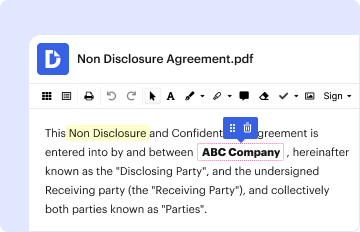
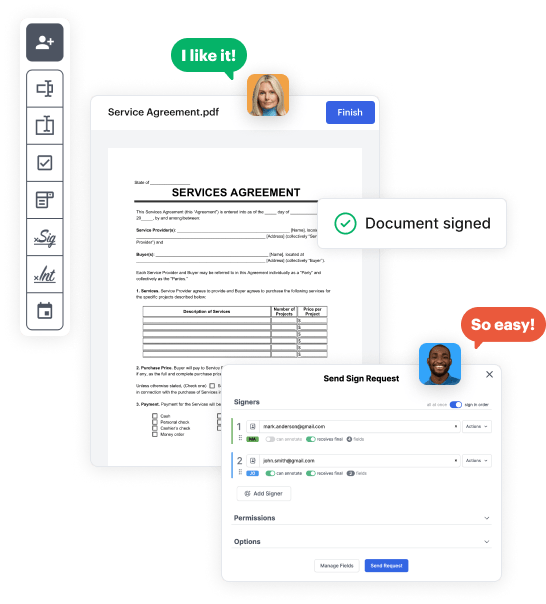
Use the top toolbar to insert fields like text and signature boxes, radio buttons, checkboxes, and more. Assign users to fields.
03. Distribute your form
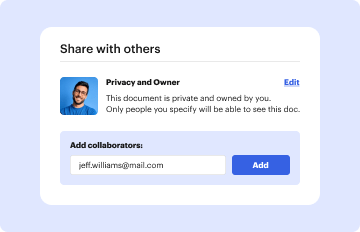
Share your Commercial Rental Agreement in seconds via email or a link. You can also download it, export it, or print it out.

A detailed walkthrough of how to build your Commercial Rental Agreement online

Form edit decoration

Step 1: Start with DocHub's free trial.

Go to the DocHub website and sign up for the free trial. This provides access to every feature you’ll need to create your Commercial Rental Agreement without any upfront cost.

Step 2: Navigate to your dashboard.

Sign in to your DocHub account and go to the dashboard.

Step 3: Craft a new document.

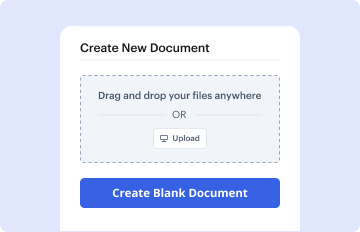
Click New Document in your dashboard, and select Create Blank Document to design your Commercial Rental Agreement from the ground up.

Step 4: Utilize editing tools.

Insert different fields such as text boxes, radio buttons, icons, signatures, etc. Arrange these fields to suit the layout of your form and assign them to recipients if needed.

Step 5: Modify the form layout.

Organize your form easily by adding, moving, removing, or combining pages with just a few clicks.

Step 6: Set up the Commercial Rental Agreement template.

Convert your newly crafted form into a template if you need to send multiple copies of the same document numerous times.

Step 7: Save, export, or distribute the form.

Send the form via email, distribute a public link, or even post it online if you aim to collect responses from more recipients.


be ready to get more

Build your Commercial Rental Agreement in minutes

Start creating now

Got questions?

We have answers to the most popular questions from our customers. If you can't find an answer to your question, please contact us.
Contact us
The Original Tenant assigns to the New Tenant of all its rights in, and delegates to the New Tenant all of its obligations under, the Lease. This transfer will become effective as of (the Effective Date), and will continue until the present term of the Lease ends.
There may also be restrictions on whether a lessee can assign the lease to others as well. A commercial lease can be both an asset and a liabilitywhether you have the right to assign it or otherwise transfer the contract can affect your business in the future.
A notice of assignment of lease, which is a form signed by both the assignor-landlord and the assignee, or new landlord, is one way to give notice.
If the lessee transfers his or her entire remaining interest in the tenancy, then the transfer is known as an assignment. If the lessee transfers only part of his or her interest, then the transfer is known as a sublease.
Assignments of Business Leases It is open to a landlord to request a guarantor or a rent deposit if the incoming tenant is of poor covenant strength. Once the landlords consent has been obtained, the tenant and assignee can enter into a deed of assignment to transfer the lease to the assignee.
be ready to get more

Build your Commercial Rental Agreement in minutes

Start creating now

Related Q&A to Commercial Rental Agreement

Yes, Microsoft Word has a free lease agreement template that you can customize to create your own contract and minimize any potential problems between tenant and landlord.
The letter of intent should include the following six things: A Statement Declaring Your Interest in Leasing the Space. A Description of Your Company. An Outline of On-Site Employees, Equipment, and Machinery. Your Business Hours. An Overview of Your Current Space. Contact Details.
The assignment of a lease is a legal process that allows a tenant to transfer or sell their lease to another party. This can be a complex process, but understanding the steps involved can help make it easier.

Additional resources on building your forms


