
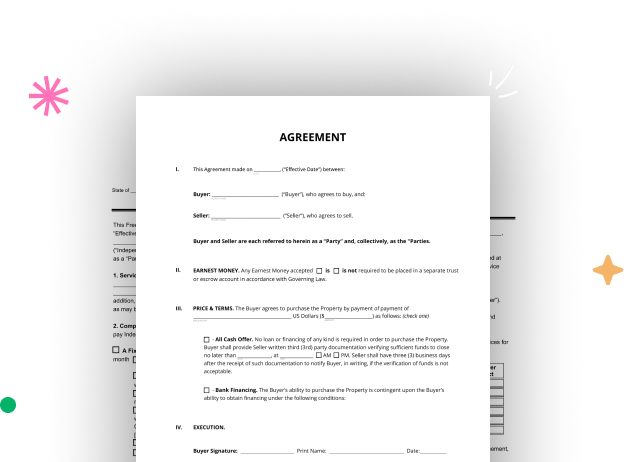

Create your Commercial Real Estate Document from scratch

Start Building Now
Title decoration

Here's how it works

01. Start with a blank Commercial Real Estate Document
Open the blank document in the editor, set the document view, and add extra pages if applicable.
02. Add and configure fillable fields
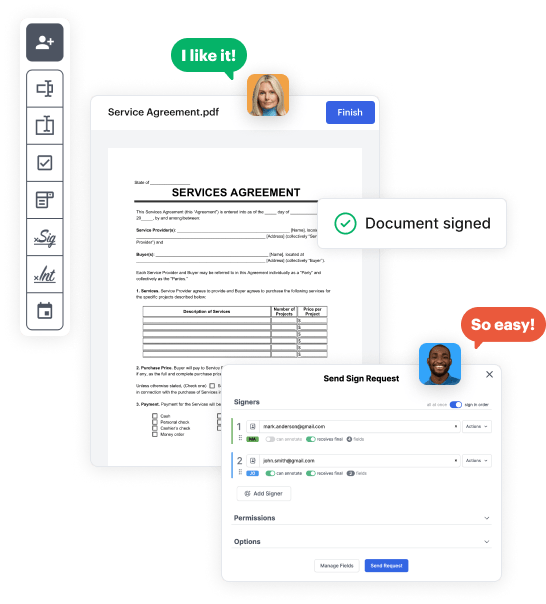
Use the top toolbar to insert fields like text and signature boxes, radio buttons, checkboxes, and more. Assign users to fields.
03. Distribute your form
Share your Commercial Real Estate Document in seconds via email or a link. You can also download it, export it, or print it out.

Create Commercial Real Estate Document from the ground up by following these comprehensive instructions

Form edit decoration

Step 1: Open DocHub and get going.

Start by registering a free DocHub account using any available sign-up method. Simply log in if you already have one.

Step 2: Register for a free 30-day trial.

Try out the whole suite of DocHub's advanced features by registering for a free 30-day trial of the Pro plan and proceed to build your Commercial Real Estate Document.

Step 3: Start with a new blank document.

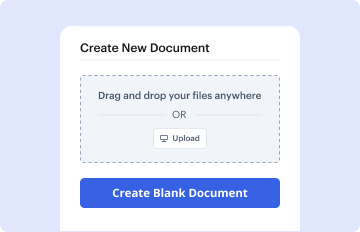
In your dashboard, select the New Document button > scroll down and choose to Create Blank Document. You will be taken to the editor.

Step 4: Organize the document’s layout.

Utilize the Page Controls icon indicated by the arrow to switch between different page views and layouts for more flexibility.

Step 5: Start adding fields to create the dynamic Commercial Real Estate Document.

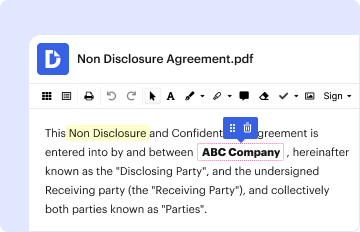
Navigate through the top toolbar to place document fields. Add and configure text boxes, the signature block (if applicable), insert images, etc.

Step 6: Prepare and customize the added fields.

Organize the fields you added based on your desired layout. Customize each field's size, font, and alignment to make sure the form is straightforward and neat-looking.

Step 7: Finalize and share your form.

Save the finalized copy in DocHub or in platforms like Google Drive or Dropbox, or create a new Commercial Real Estate Document. Share your form via email or use a public link to reach more people.


be ready to get more

Build your Commercial Real Estate Document in minutes

Start creating now

Got questions?

We have answers to the most popular questions from our customers. If you can't find an answer to your question, please contact us.
Contact us
The letter of intent should include the following six things: A Statement Declaring Your Interest in Leasing the Space. A Description of Your Company. An Outline of On-Site Employees, Equipment, and Machinery. Your Business Hours. An Overview of Your Current Space. Contact Details.
How to write a real estate purchase agreement. Identify the address of the property being purchased, including all required legal descriptions. Identify the names and addresses of both the buyer and the seller. Detail the price of the property and the terms of the purchase. Set the closing date and closing costs.
How to create winning commercial real estate proposals: a step-by-step guide Start with an executive summary. Define the property. Provide location information. Summarize the existing property market. Make specific marketing recommendations. Give some details about you and your team. Dont forget to use visuals.
The steps in a commercial real estate transaction include identification and organization, underwriting, due diligence, and closing.
These steps, namely Identification and Origination, Underwriting, Due Diligence, and Closing, require careful attention and proper execution. While each transaction may follow a unique process, they all adhere to a general framework tailored to the specific legal entities involved and the transactions peculiarities.
be ready to get more

Build your Commercial Real Estate Document in minutes

Start creating now

Related Q&A to Commercial Real Estate Document

Transaction processing systems generally go through a five-stage cycle of 1) Data entry activities 2) Transaction processing activities 3) File and database processing 4) Document and report generation 5) Inquiry processing activities.
Ecommerce payment processing: step-by-step Customer places order. The customer browses an online store, selects the products they wish to purchase, and proceeds to check out. Customer enters payment information. Payment authorization. Payment approval. Order confirmation. Settlement. Payment reconciliation.
The lifecycle of a commercial real estate transaction includes three distinct stages: acquisition, operation, and disposition. These phases together make up the asset ownership lifecycle.

Additional resources on building your forms


