
Get and manage Commercial Property Rent Default online

Boost your file management with our Commercial Property Rent Default library with ready-made form templates that suit your needs. Get the form template, alter it, fill it, and share it with your contributors without breaking a sweat. Begin working more efficiently with your forms.

The best way to manage our Commercial Property Rent Default:

  1. Open our Commercial Property Rent Default and find the form you want.
  2. Preview your form to ensure it’s what you want, and click Get Form to start working on it.
  3. Edit, include new text, or point out important information with DocHub features.
  4. Complete your form and save the changes.
  5. Download or share your document template with other recipients.

Explore all of the opportunities for your online file administration with the Commercial Property Rent Default. Get a totally free DocHub profile today!


Video Guide on Commercial Property Rent Default management

video background

Commonly Asked Questions about Commercial Property Rent Default

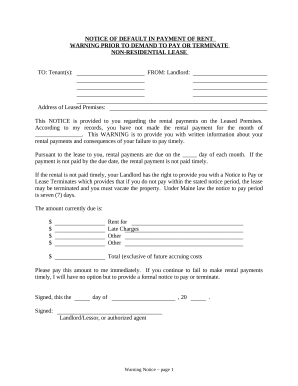
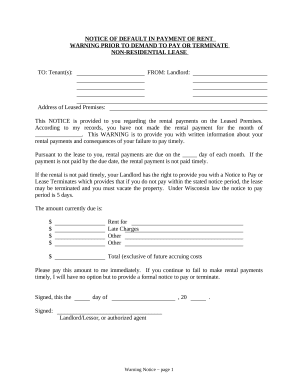
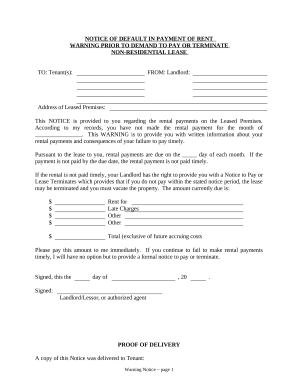
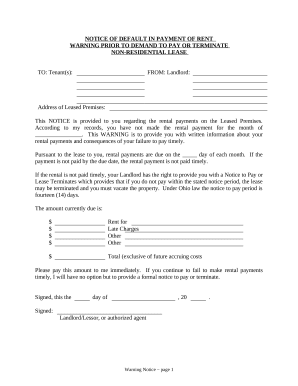
Most commercial leases state that if a tenant fails to pay the rent after written notice from the landlord, the bdocHub becomes a default and the landlord can then sue for damages and eviction of the tenant.
Commercial leases require an effective default clause that allows the landlord to force a tenant to comply with all lease obligations. The default clause commonly provides the procedure for obtaining an eviction or the threat of an eviction for a commercial tenants violation of the lease.
Lease default clauses are provisions in a rental agreement that specify the consequences of bdocHubing the contract by either the landlord or the tenant. They are designed to protect the rights and interests of both parties, but they can also have docHub impacts on their obligations, liabilities, and options.
A default is a failure to comply with a provision in the lease. Curing or remedying the default means correcting the failure or omission. A common example is a failure to pay the rent on time.
The buyer default provision is a clause that outlines the specific circumstances under which a buyer can be deemed to be in default of the contract. These may include failure to provide the required deposit, failure to obtain financing, or any other material bdocHub of the contract.
The default provision sets forth the conditions under which one of the parties will not have fulfilled its obligations under the contract. For example, failing to deliver goods or services on time, or failing to pay on time would trigger a default.
The Default Clause in Lease Agreements Lease agreements often include a default clause, which outlines the actions to be taken if either party fails to meet their obligations. For tenants, this usually pertains to unpaid rent, while for landlords, it might involve the failure to provide a habitable living environment.
The main objective of any default clause is to give the commercial landlord the legal means either (1) to cause the tenant to cure the bdocHub in an expeditious manner; (2) to swiftly and efficiently obtain a judgment of eviction against a tenant in default of the lease and thus be able to re-let the premises to a new
