

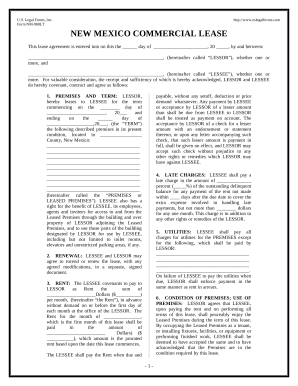
Get and manage Commercial Property Lease Agreements online

Accelerate your document managing with the Commercial Property Lease Agreements library with ready-made templates that meet your needs. Get your document template, modify it, fill it, and share it with your contributors without breaking a sweat. Start working more effectively with the documents.

How to use our Commercial Property Lease Agreements:

  1. Open our Commercial Property Lease Agreements and look for the form you want.
  2. Preview your document to ensure it’s what you want, and click on Get Form to start working on it.
  3. Edit, include new text, or highlight important information with DocHub features.
  4. Complete your form and save the adjustments.
  5. Download or share your form template with other people.

Examine all of the opportunities for your online file administration using our Commercial Property Lease Agreements. Get a totally free DocHub profile right now!


Video Guide on Commercial Property Lease Agreements management

video background

Commonly Asked Questions about Commercial Property Lease Agreements

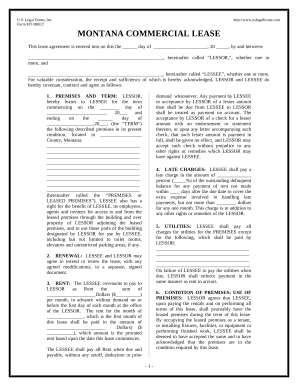
Commercial leases are typically three to five years. That guarantees enough rental income for the landlords to recoup their investment. Leases are often negotiable, but for a commercial lease, landlords frequently allow customization of the space for the sake of the renting business.
The landlord is still responsible for other expenses, including maintenance, repairs, and property management. Double net leases are often used in industrial or warehouse spaces, where the landlord wants to reduce operating expenses and the tenant wants the security of a fixed monthly rent payment.
Net leases A triple net lease, sometimes known as an NNN lease, is the most common type of commercial lease. A triple net lease is a lease whose monthly rent fee does not include operating expenses. Typical operating expenses include insurance, utilities, property taxes and maintenance costs.
Full-service: the tenant is only responsible for the rent. The landlord covers all other costs associated with the property. This is the most common type of industrial lease. It provides the most protection to tenants.
Gross Lease Gross leases are most common for commercial properties such as offices and retail space. The tenant pays a single, flat amount that includes rent, taxes, utilities, and insurance.
Gross Lease Gross leases are most common for commercial properties such as offices and retail space. The tenant pays a single, flat amount that includes rent, taxes, utilities, and insurance. The landlord is responsible for paying taxes, utilities, and insurance from the rent fees.
An Industrial Gross Lease is a type of lease often used in industrial real estate transactions. It splits some of the operating expenses between the tenant and the landlord. Base Rent: The tenant pays a base rent.
Gross leases tend to benefit the tenant, whereas net leases are more landlord friendly. In a gross lease, the tenant has more control over how much is spent on such expenses as janitorial services and utilities.
