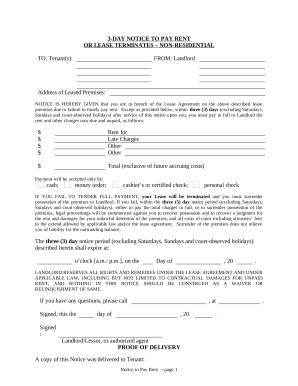
Get and manage Commercial Lease Default Notices online

Boost your form management using our Commercial Lease Default Notices collection with ready-made document templates that meet your needs. Access the form template, change it, complete it, and share it with your contributors without breaking a sweat. Begin working more effectively with the forms.

How to use our Commercial Lease Default Notices:

  1. Open our Commercial Lease Default Notices and find the form you want.
  2. Preview your form to ensure it’s what you want, and click on Get Form to start working on it.
  3. Edit, add new text, or highlight important information with DocHub tools.
  4. Fill out your form and preserve the changes.
  5. Download or share your document with other people.

Examine all the opportunities for your online file administration using our Commercial Lease Default Notices. Get a totally free DocHub profile right now!


Video Guide on Commercial Lease Default Notices management

video background

Commonly Asked Questions about Commercial Lease Default Notices

Default tenancy typically refers to a situation where the tenant is not meeting the requirements of the lease, with unpaid rent being the most common issue. The landlords risk in these situations includes the potential loss of income, the cost of legal action, and the challenge of finding a new tenant.
Default is an omission or failure by either Party to meet a provision of the lease. If the default is not cured (remedied) by the defaulting Party, actions may be taken by the other Party, including (but not limited to) terminating the lease.
Most commercial leases state that if a tenant fails to pay the rent after written notice from the landlord, the bdocHub becomes a default and the landlord can then sue for damages and eviction of the tenant.
An event of default is a defined term in loan and lease agreements. The following would constitute a default event in a typical credit agreement clause: non-payment of any amount of the loan (including interest) financial covenant bdocHub.
This Section 27(2) Notice to End a Commercial Lease is a formal notice for a tenant to serve on its landlord if the tenant does not wish to renew a lease that either is about to expire or has expired.
A landlords basic remedy/remedies for tenants default under the lease is/are:1) sue the tenant for performance. 2) terminate the lease and sue for damages. 3) dispossess the tenant without termination of the lease and sue for damages.
If your business defaults on a lease, it means that you fail to comply with one or more provisions in the leasing agreement. When this happens, your landlord sends your company an official letter. They have the right to hold you accountable for any missing payment and damages associated with your default.
The main objective of any default clause is to give the commercial landlord the legal means either (1) to cause the tenant to cure the bdocHub in an expeditious manner; (2) to swiftly and efficiently obtain a judgment of eviction against a tenant in default of the lease and thus be able to re-let the premises to a new