
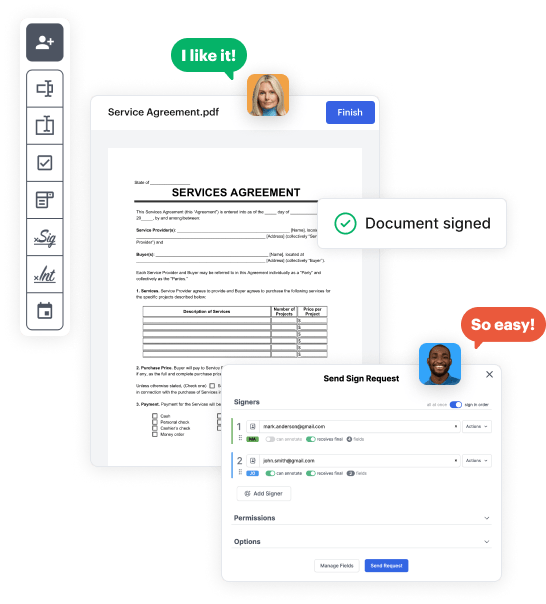
Create your Commercial Contract Legal Form from scratch

Start Building Now
Title decoration

Here's how it works

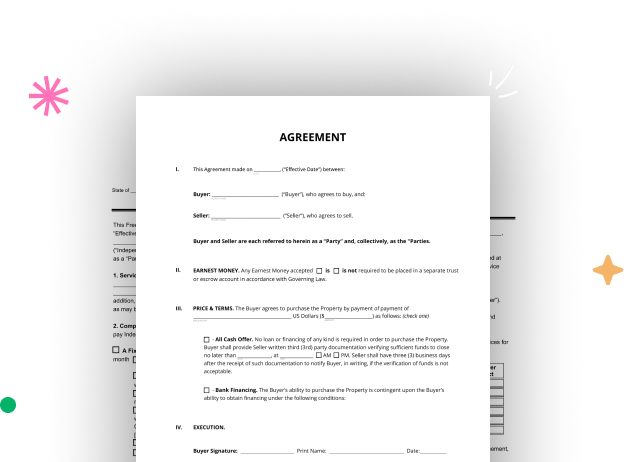
01. Start with a blank Commercial Contract Legal Form
Open the blank document in the editor, set the document view, and add extra pages if applicable.
02. Add and configure fillable fields
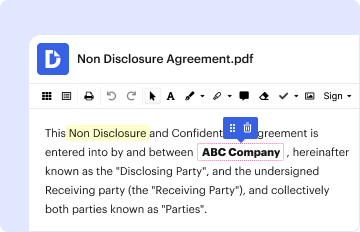
Use the top toolbar to insert fields like text and signature boxes, radio buttons, checkboxes, and more. Assign users to fields.
03. Distribute your form
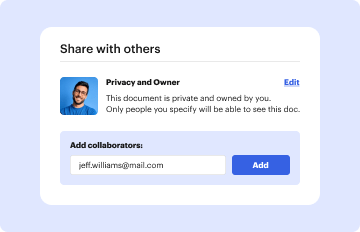
Share your Commercial Contract Legal Form in seconds via email or a link. You can also download it, export it, or print it out.

Create your Commercial Contract Legal Form in a matter of minutes

Form edit decoration

Step 1: Access DocHub to set up your Commercial Contract Legal Form.

Start signining into your DocHub account. Try out the advanced DocHub functionality at no cost for 30 days.

Step 2: Navigate to the dashboard.

Once signed in, head to the DocHub dashboard. This is where you'll build your forms and manage your document workflow.

Step 3: Design the Commercial Contract Legal Form.

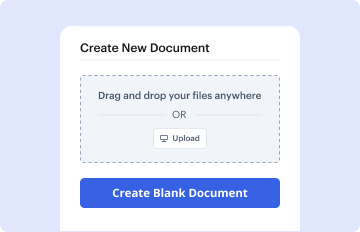
Click on New Document and choose Create Blank Document to be taken to the form builder.

Step 4: Design the form layout.

Use the DocHub features to insert and arrange form fields like text areas, signature boxes, images, and others to your document.

Step 5: Insert text and titles.

Add needed text, such as questions or instructions, using the text field to lead the users in your document.

Step 6: Customize field settings.

Adjust the properties of each field, such as making them mandatory or formatting them according to the data you plan to collect. Designate recipients if applicable.

Step 7: Review and save.

After you’ve managed to design the Commercial Contract Legal Form, make a final review of your document. Then, save the form within DocHub, export it to your chosen location, or distribute it via a link or email.


be ready to get more

Build your Commercial Contract Legal Form in minutes

Start creating now

Got questions?

We have answers to the most popular questions from our customers. If you can't find an answer to your question, please contact us.
Contact us
Process of Drafting Commercial Contracts Conducting Extensive Research: Clearly Define the Purpose and Scope: Structuring the Contract: Defining Terms Clearly: Include Essential Elements: Seek Professional Assistance: Drafting of Commercial Contracts and Agreements: Best Practices and Tips.
Although a document must be signed by each party to be considered legally binding, the mere presence of signatures does not guarantee that an agreement is enforceable in court. To be considered a legally binding contract or document, three critical elements must also be present: Subject, Consideration, and Capacity.
Why You Need a Business Contract Lawyer. If youre asking whether you need a lawyer to draft a contract, legally, the answer is no. Anyone can draft a contract on their own and as long as the elements above are included and both parties are legally competent and consent to the agreement, it is generally lawful.
Following this step-by-step checklist will mean that you can write your contract with confidence: Know your parties. Agree on the terms. Set clear boundaries. Spell out the consequences. Specify how you will resolve disputes. Cover confidentiality. Check the legality of the contract. Open it up to negotiation.
Simple contract drafting costs can range between $200 and $800 as a flat fee depending upon your needs.
be ready to get more

Build your Commercial Contract Legal Form in minutes

Start creating now

Related Q&A to Commercial Contract Legal Form

Write down all the details Ensure that your contract has all necessary elements, i.e., the terms of the contract, such as the parties involved, payment terms, the specific scope of the services, specifying the time frame of the agreement, and additional clauses that may be relevant to the agreement.
Tips on Writing a Small Business Contract Get It in Writing. Keep It Simple. Deal With the Right Person. Identify Each Party Correctly. Spell Out All of the Details. Specify Payment Obligations. Agree on Circumstances That Terminate the Contract. Agree on a Way to Resolve Disputes.


