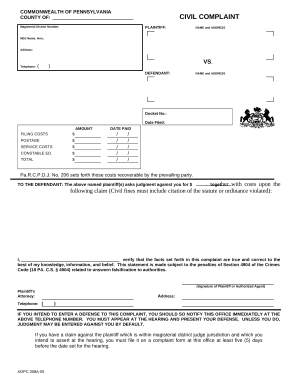
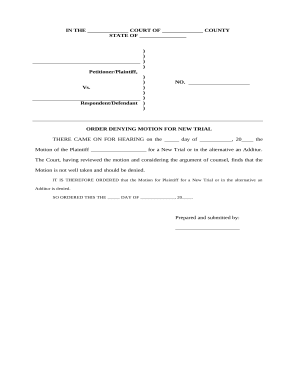
Get and handle Civil Lawsuit online

Improve your file management using our Civil Lawsuit category with ready-made templates that meet your needs. Get the form, edit it, fill it, and share it with your contributors without breaking a sweat. Begin working more efficiently with the forms.

The best way to manage our Civil Lawsuit:

  1. Open our Civil Lawsuit and look for the form you need.
  2. Preview your document to ensure it’s what you want, and click Get Form to begin working on it.
  3. Change, include new text, or highlight important information with DocHub features.
  4. Fill out your form and save the adjustments.
  5. Download or share your document with other recipients.

Examine all of the opportunities for your online document management with the Civil Lawsuit. Get your free free DocHub profile today!


Commonly Asked Questions about Civil Lawsuit

Civil cases are divided into two main categories generally by how much money they involve. The procedures are a little different between the two main types: Unlimited civil cases are cases for over $35,000. Limited civil cases are cases for $35,000 or less.
Civil court lawsuits in New York involve claims for money damages or to require specific performance or refrain from doing something.
Civil cases usually involve disputes between people or organizations while criminal cases allege a violation of a criminal law.
Primary tabs. A civil action is a noncriminal lawsuit that begins with a complaint and usually involves private parties. The plaintiff is the party filing the complaint, and the defendant is the party defending against the complaints allegations.
A civil case is a private, non-criminal lawsuit, usually involving private property rights, including respecting rights stated under the Constitution or under federal or state law.
Civil cases are the cases in which private citizens (or companies) sue each other in court. Civil cases are not about breaking a criminal law. There are many different kinds of cases in civil court.
Criminal Court judges can punish you for breaking the law by sending you to jail. Civil Court judges can order you to pay money or a fine, or make decisions about your family or your home.
The three most common civil cases are tort claims, contract bdocHubes and landlord/tenant issues. Tort Claim - An act committed by one person that causes harm to another. Tort cases can take many different forms, and can relate to a persons personal safety, safety of their property, and financial security.