
Create your Child Support Law from scratch

Start Building Now
Title decoration

Here's how it works

01. Start with a blank Child Support Law
Open the blank document in the editor, set the document view, and add extra pages if applicable.
02. Add and configure fillable fields
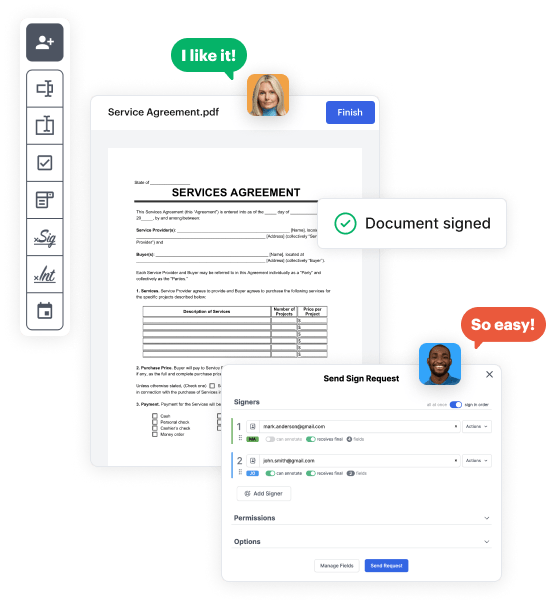
Use the top toolbar to insert fields like text and signature boxes, radio buttons, checkboxes, and more. Assign users to fields.
03. Distribute your form
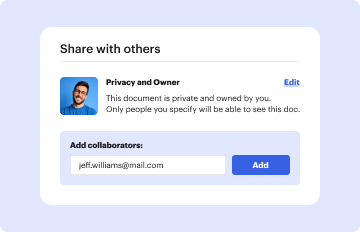
Share your Child Support Law in seconds via email or a link. You can also download it, export it, or print it out.

A detailed walkthrough of how to build your Child Support Law online

Form edit decoration

Step 1: Start with DocHub's free trial.

Go to the DocHub website and register for the free trial. This provides access to every feature you’ll require to create your Child Support Law without any upfront cost.

Step 2: Access your dashboard.

Sign in to your DocHub account and navigate to the dashboard.

Step 3: Craft a new document.

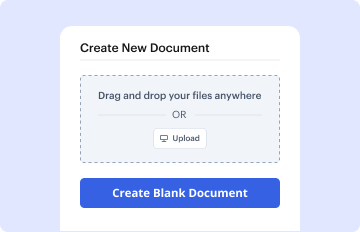
Click New Document in your dashboard, and select Create Blank Document to craft your Child Support Law from the ground up.

Step 4: Use editing tools.

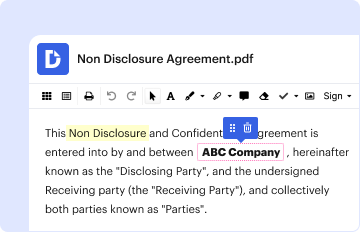
Place various elements such as text boxes, radio buttons, icons, signatures, etc. Organize these elements to match the layout of your form and assign them to recipients if needed.

Step 5: Modify the form layout.

Rearrange your form in seconds by adding, repositioning, removing, or combining pages with just a few clicks.

Step 6: Set up the Child Support Law template.

Turn your newly crafted form into a template if you need to send many copies of the same document numerous times.

Step 7: Save, export, or distribute the form.

Send the form via email, distribute a public link, or even post it online if you aim to collect responses from more recipients.


be ready to get more

Build your Child Support Law in minutes

Start creating now

Got questions?

We have answers to the most popular questions from our customers. If you can't find an answer to your question, please contact us.
Contact us
The new child support-related reforms included in the 2023-2024 Budget Trailer Bill are: Full Child Support Pass-Through for Former CalWorks Recipients: Starting from April 2024, families that formerly received CalWorks benefits will receive full pass-through of child support payments.
In New York State, a child is entitled to be supported by his or her parents until the age of 21. However, if the child is under 21 years of age, and is married, or self-supporting, or in the military, the child is considered to be emancipated and the parents support obligation ends.
Only a petition to terminate child support in NY cancels the payments after the court reviews the specific circumstances used as grounds for termination. However, either one of the parents can request a modification to the settlement if there is a docHub change in the earnings of the noncustodial parent.
Yes, the judge can order an amount you agreed on that is different from the statutory calculation. You can waive statutory child support obligations as long as your waiver has the correct format and content to protect both parties. The court wants to be sure parties understand the rights they are waiving.
Either parent may be eligible to stop a child support order if they can check at least one of the boxes:  The parent who owes child support is incarcerated with no chance of parole or is institutionalized.  Custody of the child has changed.
be ready to get more

Build your Child Support Law in minutes

Start creating now

Related Q&A to Child Support Law

Yes. Parents can come to an agreement regarding child custody and support during negotiations of the separation agreement. They can then include the provisions of the settlement agreement/stipulation in the divorce decree.
Effective March 1, 2024, for the next two years, the income cap for child support calculations is $183,000 (up from $163,000) and the income cap for maintenance is $228,000 (up from $203,000). Child support is calculated using the formula in the Child Support Standards Act [DRL 240, FCA 413].

Additional resources on building your forms