
Create your California Grant Deed from scratch

Start Building Now
Title decoration

Here's how it works

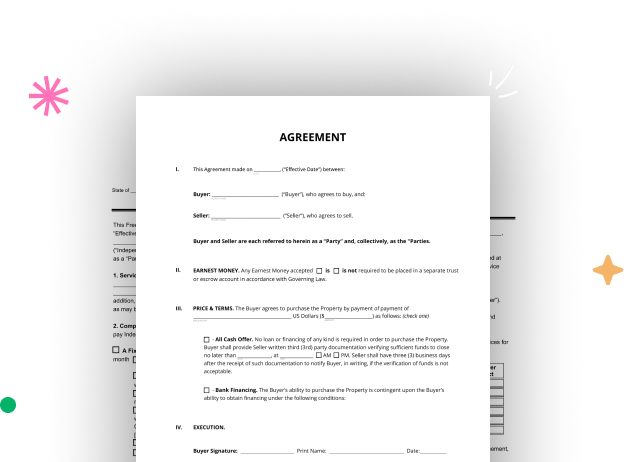
01. Start with a blank California Grant Deed
Open the blank document in the editor, set the document view, and add extra pages if applicable.
02. Add and configure fillable fields
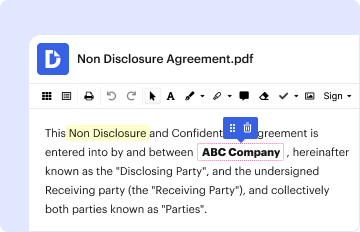
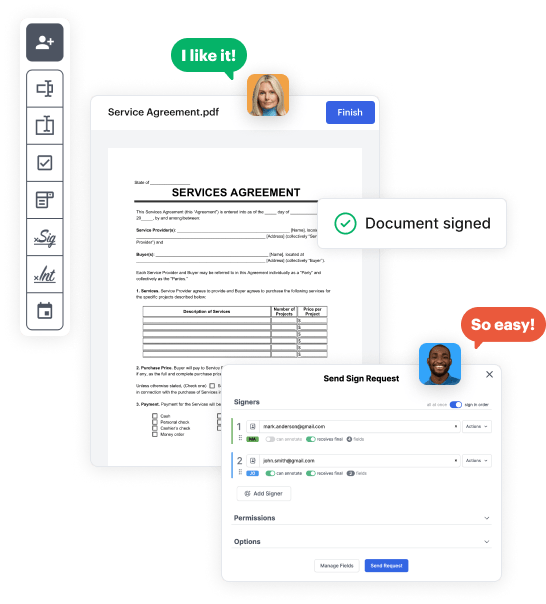
Use the top toolbar to insert fields like text and signature boxes, radio buttons, checkboxes, and more. Assign users to fields.
03. Distribute your form
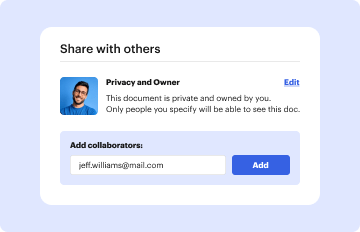
Share your California Grant Deed in seconds via email or a link. You can also download it, export it, or print it out.

Craft California Grant Deed from scratch by following these comprehensive guidelines

Form edit decoration

Step 1: Get started with DocHub.

Start by setting up a free DocHub account using any available sign-up method. Just log in if you already have one.

Step 2: Register for a free 30-day trial.

Try out the entire suite of DocHub's advanced tools by signing up for a free 30-day trial of the Pro plan and proceed to craft your California Grant Deed.

Step 3: Start with a new empty form.

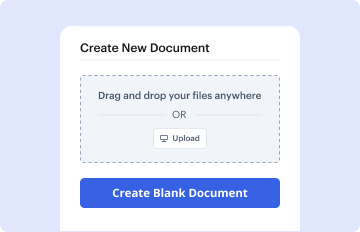
In your dashboard, click the New Document button > scroll down and choose to Create Blank Document. You will be taken to the editor.

Step 4: Organize the document’s view.

Utilize the Page Controls icon indicated by the arrow to toggle between different page views and layouts for more convenience.

Step 5: Begin by adding fields to design the dynamic California Grant Deed.

Navigate through the top toolbar to add document fields. Insert and arrange text boxes, the signature block (if applicable), insert images, etc.

Step 6: Prepare and configure the incorporated fields.

Organize the fields you incorporated based on your desired layout. Personalize each field's size, font, and alignment to make sure the form is straightforward and neat-looking.

Step 7: Finalize and share your document.

Save the ready-to-go copy in DocHub or in platforms like Google Drive or Dropbox, or craft a new California Grant Deed. Distribute your form via email or get a public link to reach more people.


be ready to get more

Build your California Grant Deed in minutes

Start creating now

Got questions?

We have answers to the most popular questions from our customers. If you can't find an answer to your question, please contact us.
Contact us
If the deed is not recorded, the party holding the deed may not be recognized under the law as the legal property owner to third parties, though the deed may be legally effective to transfer the property from the grantor to the grantee.
While recording a deed does not affect its validity, it is extremely important to record since recordation protects the grantee. If a grantee fails to record, and another deed or any other document encumbering or affecting the title is recorded, the first grantee is in jeopardy.
You can obtain a copy of your Grant Deed directly from the Los Angeles County Registrar-Recorder/County Clerk. No third party assistance is needed.
This means that subsequent purchasers, lenders, and other interested parties may be unaware of the change in ownership. Without this notice, subsequent purchasers may acquire the property without knowledge of prior claims, leading to potential legal disputes over rightful ownership.
The Grant Deed (also purchasable at most office supply or stationery stores) is completed and signed by the grantor, whose signature must be docHubd. If you determine there is no documentary transfer tax required, an exemption statement must appear on the document.
be ready to get more

Build your California Grant Deed in minutes

Start creating now

Related Q&A to California Grant Deed

Thus, an unrecorded deed is valid as between the parties and as to all those who have notice thereof. (Cal. Civ. Code, 1217, supra; Merritt v.
Record the Deed and File the PCOR at the Recorders Office The Recorders Office charges a recording fee (currently $20/first page plus $3 for additional pages). Current Sacramento fees are available at the County Clerk/Recorders website.
Both deeds convey ownership; however, there are some docHub differences between the two. Grant deeds are used in most arms-length real estate transactions, i.e. a sale, while quitclaim deeds are typically used to convey spousal interest or inter-family conveyances such as gifting and inheritance.

Additional resources on building your forms


