
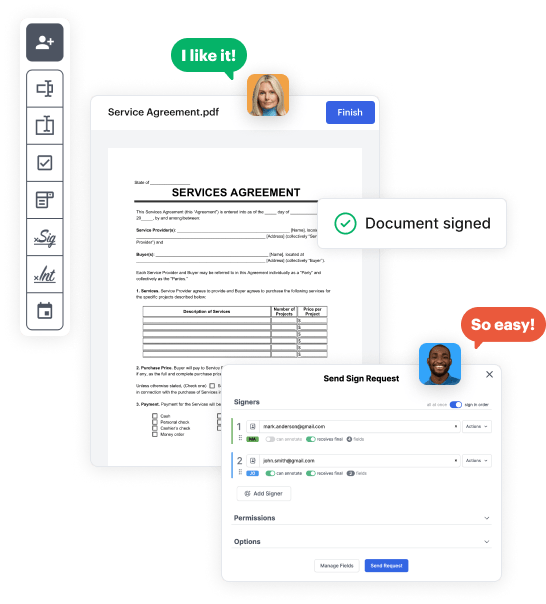
Create your Buyer Legal Form from scratch

Start Building Now
Title decoration

Here's how it works

01. Start with a blank Buyer Legal Form
Open the blank document in the editor, set the document view, and add extra pages if applicable.
02. Add and configure fillable fields
Use the top toolbar to insert fields like text and signature boxes, radio buttons, checkboxes, and more. Assign users to fields.
03. Distribute your form
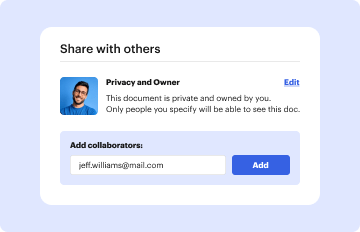
Share your Buyer Legal Form in seconds via email or a link. You can also download it, export it, or print it out.

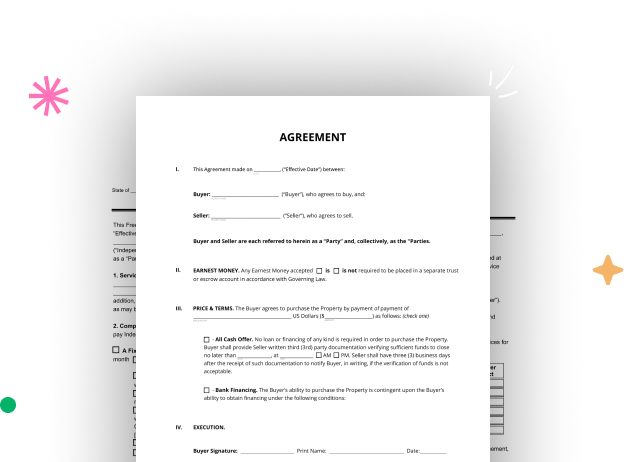
Design your Buyer Legal Form in a matter of minutes

Form edit decoration

Step 1: Access DocHub to set up your Buyer Legal Form.

Start by logging into your DocHub account. Utilize the advanced DocHub functionality free for 30 days.

Step 2: Navigate to the dashboard.

Once logged in, head to the DocHub dashboard. This is where you'll create your forms and manage your document workflow.

Step 3: Design the Buyer Legal Form.

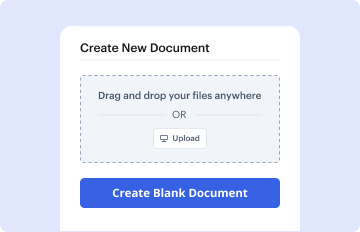
Hit New Document and choose Create Blank Document to be redirected to the form builder.

Step 4: Design the form layout.

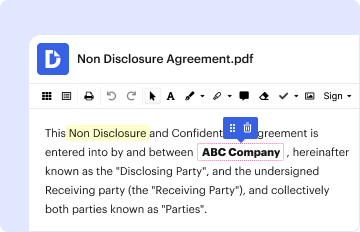
Use the DocHub features to insert and arrange form fields like text areas, signature boxes, images, and others to your document.

Step 5: Add text and titles.

Include needed text, such as questions or instructions, using the text field to guide the users in your document.

Step 6: Customize field properties.

Modify the properties of each field, such as making them required or formatting them according to the data you expect to collect. Assign recipients if applicable.

Step 7: Review and save.

After you’ve managed to design the Buyer Legal Form, make a final review of your document. Then, save the form within DocHub, export it to your chosen location, or distribute it via a link or email.


be ready to get more

Build your Buyer Legal Form in minutes

Start creating now

Got questions?

We have answers to the most popular questions from our customers. If you can't find an answer to your question, please contact us.
Contact us
Why You Need a Business Contract Lawyer. If youre asking whether you need a lawyer to draft a contract, legally, the answer is no. Anyone can draft a contract on their own and as long as the elements above are included and both parties are legally competent and consent to the agreement, it is generally lawful.
What makes a contract legally binding? To make a contract legally binding, it needs to include several key elements: Offer and acceptance One party needs to offer something (money, services, rights, etc.), and the other party needs to accept the offer. Consideration The benefit that both parties receive.
There must be an intention on both sides that they are entering into a legally binding agreement which means that both parties should understand what they are signing up for before putting their pen on paper. Without these elements being present, a contract cannot hold up in court as a legally binding document.
To be legally valid, a contract must fulfill four basic requirements: All signees must be above the age of consent. All parties must agree to the contract freely. All parties must be able to understand the agreement (legal capacity) The terms of the agreement must be permitted in law.
Either the seller or the buyer can prepare a purchase agreement. Like any contract, it can be a standard document that one party uses in the normal course of business or it can be the end result of back-and-forth negotiations.
be ready to get more

Build your Buyer Legal Form in minutes

Start creating now

Related Q&A to Buyer Legal Form

What is a simple purchase agreement? A purchase agreement is a legal document outlining the terms of a buyer-seller transaction. A generic simple purchase agreement usually includes the purchase price, payment terms, and delivery date.
To be considered legally binding, a document must include the valid signatures of all parties entering into an agreement and outline all the duties and responsibilities each has to the other(s).
At its most basic, a purchase agreement should include the following: Name and contact information for buyer and seller. The address of the property being sold. The price to be paid for the property. The date of transfer. Disclosures. Contingencies. Signatures.

Additional resources on building your forms


