
Create your Business Records Maintenance Package from scratch

Start Building Now
Title decoration

Here's how it works

01. Start with a blank Business Records Maintenance Package
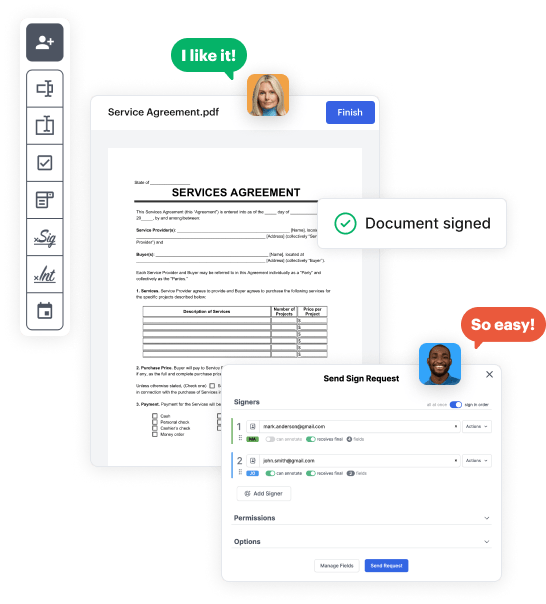
Open the blank document in the editor, set the document view, and add extra pages if applicable.
02. Add and configure fillable fields
Use the top toolbar to insert fields like text and signature boxes, radio buttons, checkboxes, and more. Assign users to fields.
03. Distribute your form
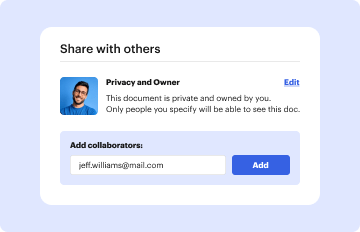
Share your Business Records Maintenance Package in seconds via email or a link. You can also download it, export it, or print it out.

A simple tutorial on how to create a polished Business Records Maintenance Package

Form edit decoration

Step 1: Log in to DocHub to create your Business Records Maintenance Package.

First, sign in to your DocHub account. If you don't have one, you can easily sign up for free.

Step 2: Navigate to the dashboard.

Once logged in, access your dashboard. This is your primary hub for all document-focused processes.

Step 3: Start new document creation.

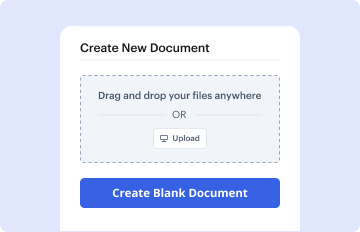
In your dashboard, choose New Document in the upper left corner. Choose Create Blank Document to craft the Business Records Maintenance Package from scratch.

Step 4: Insert template fillable areas.

Add numerous fields like text boxes, images, signature fields, and other elements to your template and designate these fields to certain recipients as necessary.

Step 5: Personalize your form.

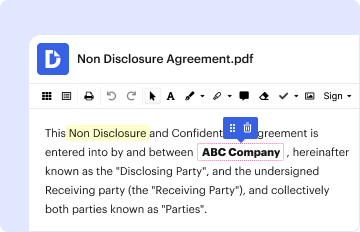
Personalize your template by inserting guidelines or any other crucial details leveraging the text option.

Step 6: Double-check and modify the document.

Carefully go over your created Business Records Maintenance Package for any mistakes or necessary adjustments. Take advantage of DocHub's editing features to enhance your form.

Step 7: Send out or export the form.

After completing, save your work. You may select to keep it within DocHub, transfer it to various storage solutions, or forward it via a link or email.


be ready to get more

Build your Business Records Maintenance Package in minutes

Start creating now

Got questions?

We have answers to the most popular questions from our customers. If you can't find an answer to your question, please contact us.
Contact us
Create a file plan to manage records Describe the kinds of items the organization acknowledges to be records. Describe what broader category of records the items belong to. Indicate where records are stored. Describe retention periods for records. Delineate who is responsible for managing the various kinds of records.
How to develop a record keeping system for a small business? Use a digital document management system. Save all your receipts. Save all invoices. Implement payroll and accounting software. Separate and log your business and personal finances. Conduct regular security checks while backing up your records.
A good recordkeeping system includes a summary of all business transactions. These are usually kept in books called journals and ledgers, which business owners can buy at an office supply store. All requirements that apply to hard copy books and records also apply to electronic business records.
What are the five phases of the records life cycle? The five core phases that make up the records life cycle are creation, maintenance and use, final disposition, storage, and security.
Creating a Records Management System Step 1: Choose Your Storage Option. Step 2: Create a Detailed Naming System. Step 3: Organize by Date and Content Type. Step 4: Re-Assess Your System Periodically. Step 5: Integrate Organization Into Practice.
be ready to get more

Build your Business Records Maintenance Package in minutes

Start creating now

Related Q&A to Business Records Maintenance Package

These steps can be further explained as: Create or receive. This is the beginning of the records management process, which starts with creating or receiving a document relating to an organizations transaction or activity. Use or modify. Maintain or protect. Dispose or destroy. Archive or preserve.
How to Design and Implement a Record System in 8 Steps Step 1: Complete Inventory of All Records. Step 2: Determine Who Has Access To Process Records. Step 3: Make a Records Retention and Destruction Schedule. Step 4: Determine How To Store and Manage Your Records. Step 5: Create and Document Proper Procedures.
Organization/Filing For those records/files needed on a regular basis, keep them in the most accessible place such as a file cabinet within your desk. If youre in an area where the records are needed by many people, keep them centrally located so everyone has fairly easy access.

Additional resources on building your forms


