
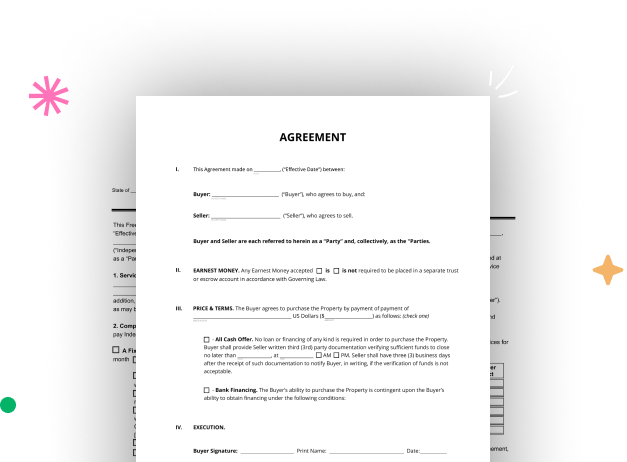

Create your Business Accounting Document from scratch

Start Building Now
Title decoration

Here's how it works

01. Start with a blank Business Accounting Document
Open the blank document in the editor, set the document view, and add extra pages if applicable.
02. Add and configure fillable fields
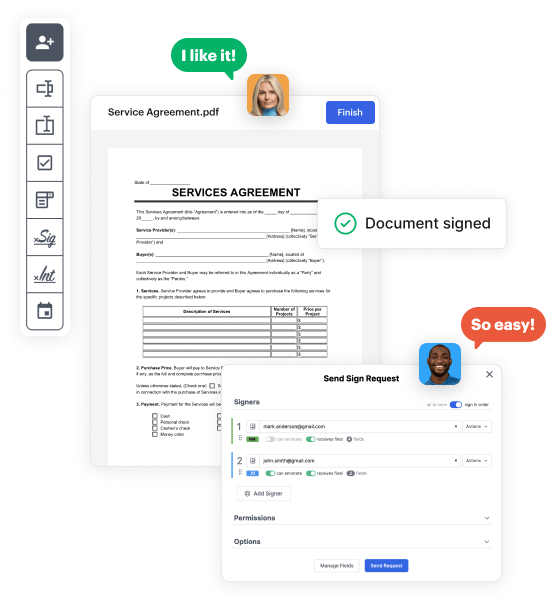
Use the top toolbar to insert fields like text and signature boxes, radio buttons, checkboxes, and more. Assign users to fields.
03. Distribute your form
Share your Business Accounting Document in seconds via email or a link. You can also download it, export it, or print it out.

A simple guide on how to create a polished Business Accounting Document

Form edit decoration

Step 1: Sign in to DocHub to begin creating your Business Accounting Document.

First, log in to your DocHub account. If you don't have one, you can easily register for free.

Step 2: Head to the dashboard.

Once logged in, navigate to your dashboard. This is your main hub for all document-focused operations.

Step 3: Initiate new document creation.

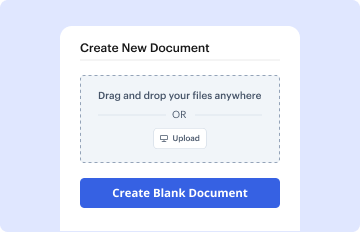
In your dashboard, choose New Document in the upper left corner. Opt for Create Blank Document to craft the Business Accounting Document from a blank slate.

Step 4: Incorporate form fillable areas.

Place various elements like text boxes, images, signature fields, and other options to your form and designate these fields to certain recipients as needed.

Step 5: Personalize your form.

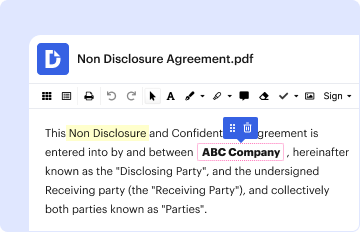
Personalize your template by incorporating walkthroughs or any other vital tips utilizing the text tool.

Step 6: Go over and tweak the form.

Thoroughly review your created Business Accounting Document for any errors or necessary adjustments. Leverage DocHub's editing capabilities to fine-tune your form.

Step 7: Share or export the form.

After completing, save your copy. You can opt to retain it within DocHub, transfer it to various storage services, or forward it via a link or email.


be ready to get more

Build your Business Accounting Document in minutes

Start creating now

Got questions?

We have answers to the most popular questions from our customers. If you can't find an answer to your question, please contact us.
Contact us
9 Steps To Build a Startup Bookkeeping System Choose either cash or accrual accounting method. Open a business bank account. Set up accounting software. Connect a payment collection system. Set up a payroll system. Begin regular bank reconciliation. Build key reports. Establish a company expense policy.
What is an Opening Day Balance Sheet for New Businesses? An opening day balance sheet for new businesses is a financial statement that provides an overview of the assets, liabilities, and equity of a business on its first day of operations.
Some will choose to simply hire an accountant to save time, but doing your accounting can provide you with more control. Some also find this to be a rewarding process. The results are in: 72% of self-employed people do their own accounting.
How to make a balance sheet in 8 steps Step 1: Pick the balance sheet date. Step 2: List all of your assets. Step 3: Add up all of your assets. Step 4: Determine current liabilities. Step 5: Calculate long-term liabilities. Step 6: Add up liabilities. Step 7: Calculate owners equity.
How to make a balance sheet Invest in accounting software. Create a heading. Use the basic accounting equation to separate each section. Include all of your assets. Create a section for liabilities. Create a section for owners equity. Add total liabilities to total owners equity.
be ready to get more

Build your Business Accounting Document in minutes

Start creating now

Related Q&A to Business Accounting Document

Content Choose an Accounting Method. Set up a Chart of Accounts. Establish a Business Bank Account. Keep Track of Expenses and Income. Set Up a System for Managing Receipts. Choose Accounting Software. Determine a Regular Bookkeeping Schedule. Reconcile Your Accounts Regularly.
Here are the steps you can follow to create a basic balance sheet for your small business. Specify the Reporting Period. Identify Your Assets. Determine Your Liabilities. Determine Shareholders Equity. Add Total Shareholder Equity and Total Liability to Compare to Assets.
Follow these steps: Step 1: Pick the balance sheet date. Step 2: List all of your assets. Step 3: Add up all of your assets. Step 4: Determine current liabilities. Step 5: Calculate long-term liabilities. Step 6: Add up liabilities. Step 7: Calculate owners equity. Step 8: Add up liabilities and owners equity.

Additional resources on building your forms