
Create your Brick Masonry Agreement from scratch

Start Building Now
Title decoration

Here's how it works

01. Start with a blank Brick Masonry Agreement
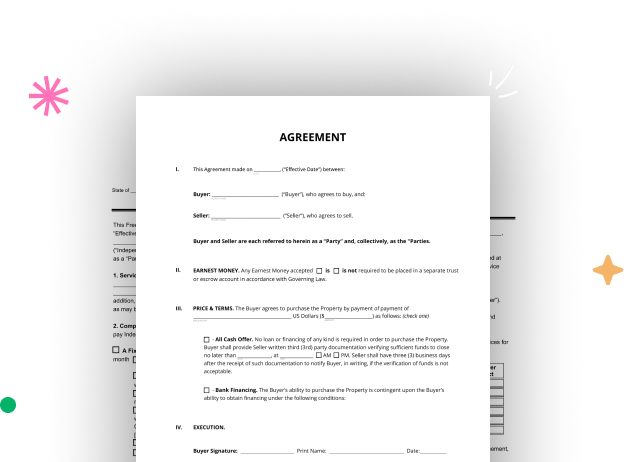
Open the blank document in the editor, set the document view, and add extra pages if applicable.
02. Add and configure fillable fields
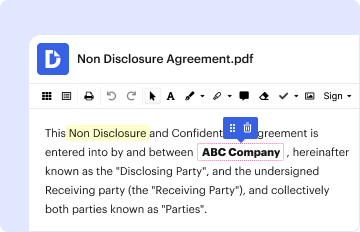
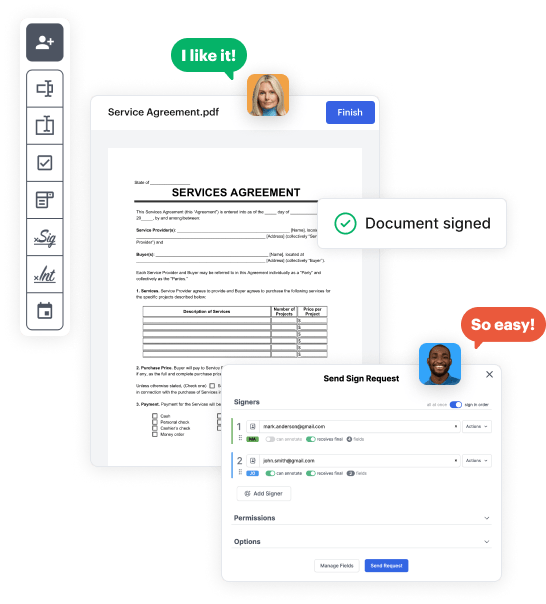
Use the top toolbar to insert fields like text and signature boxes, radio buttons, checkboxes, and more. Assign users to fields.
03. Distribute your form
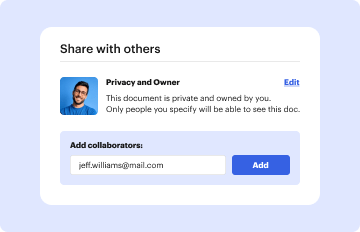
Share your Brick Masonry Agreement in seconds via email or a link. You can also download it, export it, or print it out.

Craft Brick Masonry Agreement from the ground up by following these step-by-step instructions

Form edit decoration

Step 1: Get started with DocHub.

Start by registering a free DocHub account using any offered sign-up method. If you already have one, simply log in.

Step 2: Sign up for a 30-day free trial.

Try out the complete collection of DocHub's advanced features by registering for a free 30-day trial of the Pro plan and proceed to build your Brick Masonry Agreement.

Step 3: Start with a new empty form.

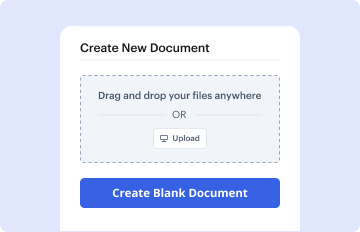
In your dashboard, select the New Document button > scroll down and choose to Create Blank Document. You’ll be taken to the editor.

Step 4: Organize the document’s layout.

Use the Page Controls icon indicated by the arrow to toggle between different page views and layouts for more convenience.

Step 5: Start adding fields to create the dynamic Brick Masonry Agreement.

Use the top toolbar to add document fields. Insert and configure text boxes, the signature block (if applicable), insert images, etc.

Step 6: Prepare and customize the incorporated fields.

Arrange the fillable areas you incorporated per your chosen layout. Modify the size, font, and alignment to make sure the form is easy to use and professional.

Step 7: Finalize and share your document.

Save the completed copy in DocHub or in platforms like Google Drive or Dropbox, or craft a new Brick Masonry Agreement. Share your form via email or use a public link to reach more people.


be ready to get more

Build your Brick Masonry Agreement in minutes

Start creating now

Got questions?

We have answers to the most popular questions from our customers. If you can't find an answer to your question, please contact us.
Contact us
A contract should contain everything agreed upon by you and your licensed contractor. It should detail the work, price, when payments will be made, who gets the necessary building permits, and when the job will be finished. The contract also must identify the contractor, and give their address and license number.
The basic elements required for the agreement to be a legally enforceable contract are: mutual assent, expressed by a valid offer and acceptance; adequate consideration; capacity; and legality.
There are five common types of construction contracts: lump sum (or fixed price), time and materials (TM), unit price, guaranteed maximum price (GMP), and cost-plus.
Top 10 Common Mistakes that We See in Construction Contracts Its not written down. Both parties havent signed the contract. Not all of the terms of the agreement are in writing and in the contract. The timeline is unclear. Particular terms arent defined. Theres no written approval of any changes to the contract.
Elements of a construction contract Name of contractor and contact information. Name of homeowner and contact information. Describe property in legal terms. List attachments to the contract. The cost. Failure of homeowner to obtain financing. Description of the work and the completion date. Right to stop the project.
be ready to get more

Build your Brick Masonry Agreement in minutes

Start creating now

Related Q&A to Brick Masonry Agreement

Basic types of construction The four main types of construction are: residential construction, commercial construction, industrial construction, and infrastructure construction.
The 4 Different Types of Construction Contracts Lump Sum Contract. A lump sum contract sets one determined price for all work done for the project. Unit Price Contract. Cost Plus Contract. Time and Materials Contract.
Contract Types Comparison Party 1 offers Bilateral Services or goods that are of value to the other party Unilateral Services or goods that the other party requested, usually in an open request Implied Services or goods Express Anything9 more rows Jan 26, 2022

Additional resources on building your forms


