
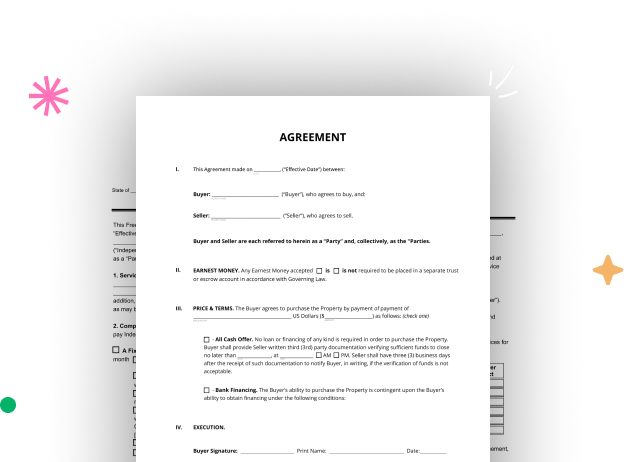

Create your Bankruptcy Court Document from scratch

Start Building Now
Title decoration

Here's how it works

01. Start with a blank Bankruptcy Court Document
Open the blank document in the editor, set the document view, and add extra pages if applicable.
02. Add and configure fillable fields
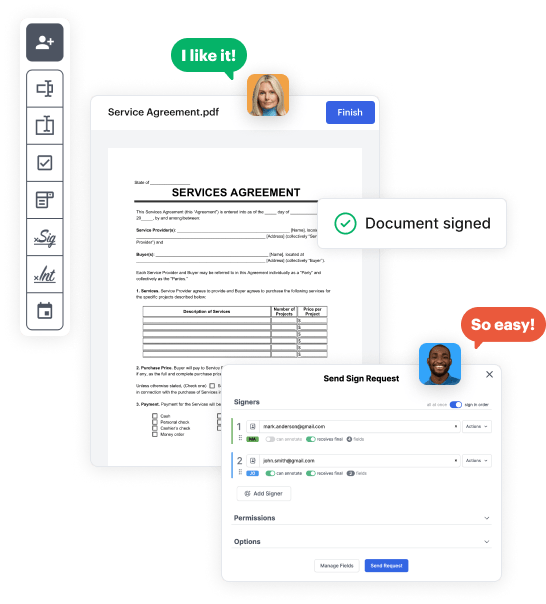
Use the top toolbar to insert fields like text and signature boxes, radio buttons, checkboxes, and more. Assign users to fields.
03. Distribute your form
Share your Bankruptcy Court Document in seconds via email or a link. You can also download it, export it, or print it out.

Craft Bankruptcy Court Document from scratch with these step-by-step guidelines

Form edit decoration

Step 1: Open DocHub and get going.

Start by signing up for a free DocHub account using any offered sign-up method. If you already have one, simply log in.

Step 2: Register for a 30-day free trial.

Try out the complete suite of DocHub's advanced features by signing up for a free 30-day trial of the Pro plan and proceed to build your Bankruptcy Court Document.

Step 3: Start with a new empty form.

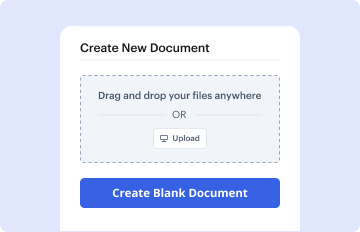
In your dashboard, hit the New Document button > scroll down and choose to Create Blank Document. You will be taken to the editor.

Step 4: Arrange the view of the document.

Utilize the Page Controls icon indicated by the arrow to toggle between two page views and layouts for more convenience.

Step 5: Start inserting fields to create the dynamic Bankruptcy Court Document.

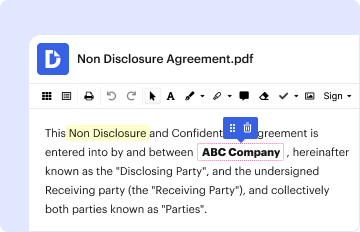
Navigate through the top toolbar to add document fields. Insert and format text boxes, the signature block (if applicable), embed images, etc.

Step 6: Prepare and customize the added fields.

Organize the fillable areas you added per your chosen layout. Modify each field's size, font, and alignment to make sure the form is user-friendly and neat-looking.

Step 7: Finalize and share your document.

Save the completed copy in DocHub or in platforms like Google Drive or Dropbox, or craft a new Bankruptcy Court Document. Send out your form via email or use a public link to reach more people.


be ready to get more

Build your Bankruptcy Court Document in minutes

Start creating now

Got questions?

We have answers to the most popular questions from our customers. If you can't find an answer to your question, please contact us.
Contact us
The most common types of bankruptcy are chapter 7, which are liquidating bankruptcy, and chapter 13 cases, often used by individuals who want to catch up on past due mortgage or car loan payments and keep their assets.
Chapter 7 is the most common form of bankruptcy for individuals. Chapter 11 bankruptcy is usually for corporations because of its complexity, but individuals can file too.
The official bankruptcy records in Canada are compiled by the Office of the Superintendent of Bankruptcy Canada (OSB) and are public records. This means that any member of the public can access them via an internet search tool on the OSB website, although there is a fee, and searches must be very specific.
Though there are a million possible reasons why people might file bankruptcy, the following contributing factors are commonly cited. Loss of Income. Medical Expenses. Unaffordable Mortgage. Student Loans. Overwhelming Debt. Helping Friends or Relatives. Divorce.
Generally, Chapter 7 is more appropriate for simple cases while Chapter 13 for more complicated bankruptcies. Or somewhat more accurately, Chapter 13 can give you more power over and flexibility with certain kinds of creditors, and if you have non-exempt assets.
be ready to get more

Build your Bankruptcy Court Document in minutes

Start creating now

Related Q&A to Bankruptcy Court Document

Affidavit. Your application must be accompanied by an affidavit which sets out the grounds in support of your application and the date when the bankruptcy notice was served on you. You will also need to attach a copy of any application you have made to set aside the judgment or order underlying the bankruptcy notice.

Additional resources on building your forms


