


Create your Adult Children Legal Document from scratch

Start Building Now
Title decoration

Here's how it works

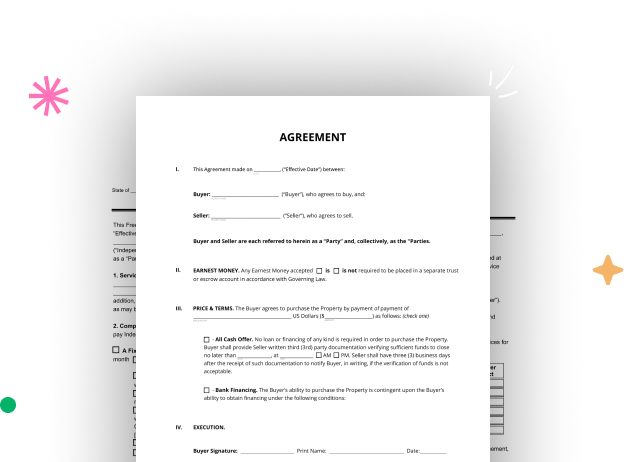
01. Start with a blank Adult Children Legal Document
Open the blank document in the editor, set the document view, and add extra pages if applicable.
02. Add and configure fillable fields
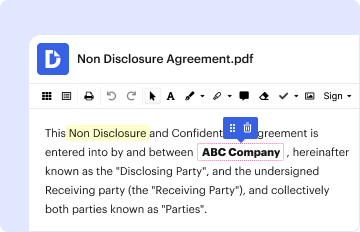
Use the top toolbar to insert fields like text and signature boxes, radio buttons, checkboxes, and more. Assign users to fields.
03. Distribute your form
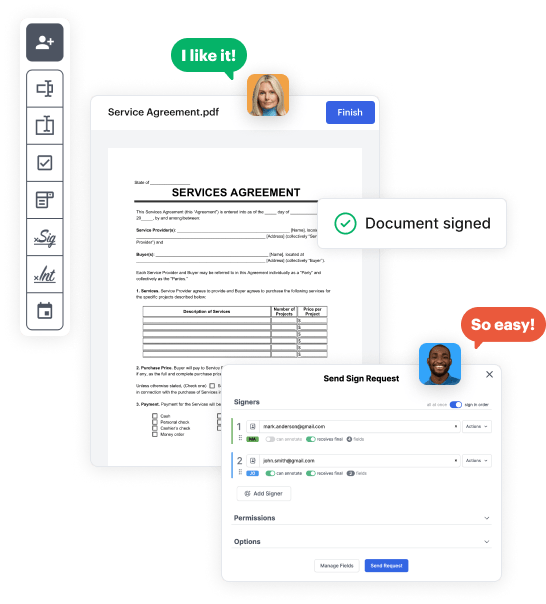
Share your Adult Children Legal Document in seconds via email or a link. You can also download it, export it, or print it out.

A quick guide on how to set up a polished Adult Children Legal Document

Form edit decoration

Step 1: Log in to DocHub to begin creating your Adult Children Legal Document.

First, sign in to your DocHub account. If you don't have one, you can easily sign up for free.

Step 2: Head to the dashboard.

Once logged in, head to your dashboard. This is your primary hub for all document-focused tasks.

Step 3: Initiate new document creation.

In your dashboard, click on New Document in the upper left corner. Select Create Blank Document to create the Adult Children Legal Document from a blank slate.

Step 4: Incorporate form elements.

Add various elements like text boxes, images, signature fields, and other options to your form and assign these fields to certain recipients as necessary.

Step 5: Adjust your template.

Refine your document by inserting instructions or any other crucial tips leveraging the text option.

Step 6: Double-check and correct the document.

Carefully check your created Adult Children Legal Document for any discrepancies or essential adjustments. Utilize DocHub's editing capabilities to enhance your template.

Step 7: Distribute or export the template.

After finalizing, save your copy. You can choose to retain it within DocHub, export it to various storage platforms, or send it via a link or email.


be ready to get more

Build your Adult Children Legal Document in minutes

Start creating now

Got questions?

We have answers to the most popular questions from our customers. If you can't find an answer to your question, please contact us.
Contact us
Thanks to the HIPAA, most people dont have to share their medical records or information. That includes most American children after they turn 18, even if theyre on your health plan. But if your child signs a waiver, medical providers will be allowed to give you that information.
You bet it is! If you were to go to a lawyer to create your will, you would sit down with them and craft all the necessary documents. This is a great way to go, it just tends to be much more expensive.
HIPAA helps you stay connected with your adult son or daughter for whom you are caring by permitting health professionals to contact you with information related to them that is necessary and relevant to your involvement with their health care or payment for care.
Acknowledge and empathize with your adult childs struggles. Chances are he/she doesnt feel particularly good about being stuck in this situation. Try to keep interactions positive whenever possible. Dont forget to give credit, compliments, or praise
Legal documents such as durable power of attorney, a healthcare proxy and a HIPAA release can give parents the legal right to make decisions if their child needs help.
be ready to get more

Build your Adult Children Legal Document in minutes

Start creating now

Related Q&A to Adult Children Legal Document

Supporting a Grown Child with Mental Illness Choose the Right Time. Timing is crucial when initiating conversations about mental health. Express Empathy. Listen Actively. Avoid Judgment. Offer Support. Encourage Professional Help. Respect Boundaries.
Here are thirteen ways to respond to a disrespectful grown child: Take a Deep Breath Before Responding. Remain Respectful. Set Clear Boundaries. Consistently Reinforce the Boundaries. Make Sure You Have Realistic Expectations. Be Open to Listening Empathizing. Acknowledge Your Mistakes Apologize.
Parents have the right to make medical decisions for their children. But when a teenager turns 18, this parental authority comes to an end. With adulthood, a person gains the right of medical self determination, regardless of their disability status. That right can only be taken away by a court order.

Additional resources on building your forms


