
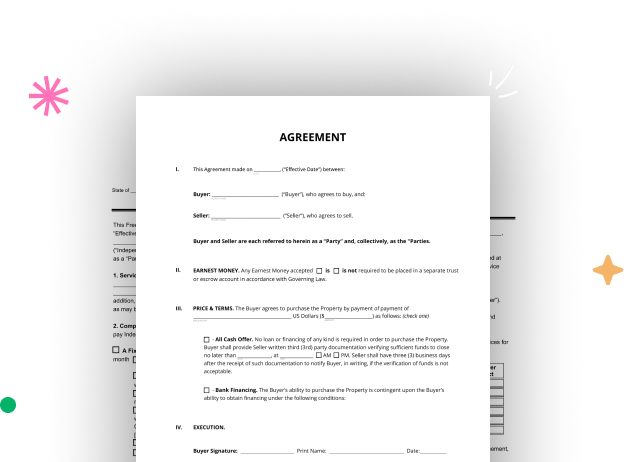

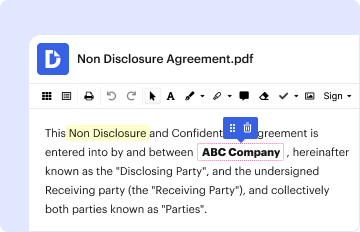


Create your Adult Children Estate Planning from scratch

Start Building Now
Title decoration

Here's how it works

01. Start with a blank Adult Children Estate Planning
Open the blank document in the editor, set the document view, and add extra pages if applicable.
02. Add and configure fillable fields
Use the top toolbar to insert fields like text and signature boxes, radio buttons, checkboxes, and more. Assign users to fields.
03. Distribute your form
Share your Adult Children Estate Planning in seconds via email or a link. You can also download it, export it, or print it out.

Design your Adult Children Estate Planning in a matter of minutes

Form edit decoration

Step 1: Access DocHub to build your Adult Children Estate Planning.

Begin by logging into your DocHub account. Utilize the advanced DocHub functionality free for 30 days.

Step 2: Navigate to the dashboard.

Once logged in, head to the DocHub dashboard. This is where you'll build your forms and handle your document workflow.

Step 3: Create the Adult Children Estate Planning.

Click on New Document and choose Create Blank Document to be taken to the form builder.

Step 4: Design the form layout.

Use the DocHub toolset to insert and arrange form fields like text areas, signature boxes, images, and others to your document.

Step 5: Add text and titles.

Include necessary text, such as questions or instructions, using the text tool to guide the users in your form.

Step 6: Configure field settings.

Adjust the properties of each field, such as making them required or formatting them according to the data you plan to collect. Assign recipients if applicable.

Step 7: Review and save.

After you’ve managed to design the Adult Children Estate Planning, make a final review of your document. Then, save the form within DocHub, send it to your selected location, or distribute it via a link or email.


be ready to get more

Build your Adult Children Estate Planning in minutes

Start creating now

Got questions?

We have answers to the most popular questions from our customers. If you can't find an answer to your question, please contact us.
Contact us
Estate planning tools like wills and trusts are the best options for leaving money to your children because you can outline how and when your children will receive the money. If the child is a minor, you can even dictate how they can spend the money.
If you inherit a large amount of money, take your time in deciding what to do with it. A federally insured bank or credit union account can be a good, safe place to park the money while you make your decisions. Paying off high-interest debts such as credit card debt is one good use for an inheritance.
Using trusts for gifting to family In some cases, using a trust can allow you to give to your children tax-free, while retaining limits on how the money is used or when they can access it. Trusts can also help you ensure that the money you gift to an individual is for their use only.
Shore up your plan. Assign a professional executor who will oversee your estate. Work with your children on a plan to develop the knowledge and skills theyll need to manage more complicated assets. Identify potential mentors whom you can trust to guide your children after youre gone.
Solution Revocable Trust A Revocable Living Trust allows you to title the assets in the name of the Trust rather than individuals. An adult child may still be a beneficiary of the Trust, yet there is zero risk that the assets will be exposed to any of the beneficiarys creditors.
be ready to get more

Build your Adult Children Estate Planning in minutes

Start creating now

Related Q&A to Adult Children Estate Planning

Using trusts for gifting to family Despite their reputation as a tool for the rich, trusts can help provide a level of control over your assets for people of all wealth levels. You can use a trust to give money while youre alive, or to distribute your estate after your death.
If you leave money to your children through an irrevocable trust, technically the trust owns the money not the beneficiary. An irrevocable trust can protect your assets and require the trust executor to follow your exact wishes for the distribution of your assets, even if your child dies or becomes divorced.
When you give an inheritance before death, you have the opportunity to offer your guidance along with it. You can encourage recipients to continue your legacy of giving and helping others. You can share your knowledge and teach others how to manage assets for subsequent generations.

Additional resources on building your forms


