Create your Property to church Donation Form from scratch

Start Building Now
Title decoration

Here's how it works

01. Start with a blank Property to church Donation Form
Open the blank document in the editor, set the document view, and add extra pages if applicable.
02. Add and configure fillable fields
Use the top toolbar to insert fields like text and signature boxes, radio buttons, checkboxes, and more. Assign users to fields.
03. Distribute your form
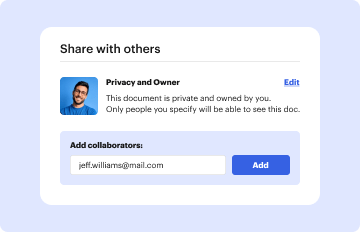
Share your Property to church Donation Form in seconds via email or a link. You can also download it, export it, or print it out.

Create your Property to church Donation Form in a matter of minutes
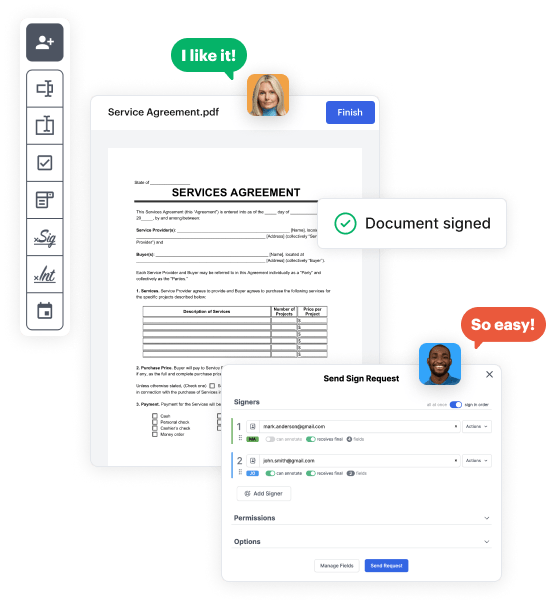
Form edit decoration

Step 1: Access DocHub to set up your Property to church Donation Form.

Start by accessing your DocHub account. Explore the advanced DocHub functionality at no cost for 30 days.

Step 2: Navigate to the dashboard.

Once signed in, head to the DocHub dashboard. This is where you'll create your forms and manage your document workflow.

Step 3: Design the Property to church Donation Form.

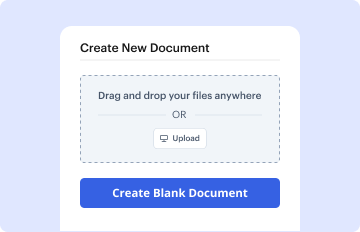
Click on New Document and select Create Blank Document to be redirected to the form builder.

Step 4: Set up the form layout.

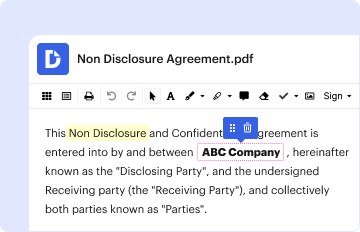
Use the DocHub toolset to insert and configure form fields like text areas, signature boxes, images, and others to your document.

Step 5: Insert text and titles.

Include needed text, such as questions or instructions, using the text tool to assist the users in your document.

Step 6: Customize field settings.

Modify the properties of each field, such as making them required or arranging them according to the data you plan to collect. Assign recipients if applicable.

Step 7: Review and save.

After you’ve managed to design the Property to church Donation Form, make a final review of your document. Then, save the form within DocHub, send it to your selected location, or share it via a link or email.


be ready to get more

Build your Property to church Donation Form in minutes

Start creating now

Got questions?

We have answers to the most popular questions from our customers. If you can't find an answer to your question, please contact us.
Contact us
Donating to a 501(c)(3) Contributions to private foundations are also tax-deductible but generally capped at 30% or 50% of the AGI. Many donors prefer to give to 501(c)(3) organizations because of tax deductions. 501c3 organizations need to get tax-exempt status to be able to offer their donors this option.
You can donate 100% of your yearly income to any church. However, there are limitations on how much of that donation you can claim as a tax deduction since you will still have to pay federal tax on your gross income earned in a year.
By accepting one-time donations, churches allow people to express their generosity when they feel moved to do so. One-time donations can be made in person, through the mail, or online. Churches do well to offer easy-to-use online platforms for giving so that people can easily make one-time donations.
5 Steps to Set Up a Donation Page for Your Nonprofit Step 1: Sign Up with Donorbox (for Free!) and Connect Your Payment Processor. Step 2: Create a Campaign and Your Donation Page. Step 3: Customize the Donation Form. Step 4: Customize Your Email Receipt to Donors.
Cash Donations All of these leave behind a paper trail that you can use to substantiate your deduction. Making a one-time cash donation of $250 or more means you must get a receipt from the church. Otherwise, you wont be able to deduct the donation.
be ready to get more

Build your Property to church Donation Form in minutes

Start creating now

Related Q&A to Property to church Donation Form

Broadly, you can make deductible charitable contributions up to 60% of your adjusted gross income. Beyond that, IRS rules for church donations do not offer you any further tax benefits.
1. The Basic Donation Letter Format Salutation. Greet your potential donor with a friendly opening, and personalize it with their name whenever possible. Explanation of your mission. Your project, event, or needs. Compelling details. A specific request. A call-to-action.
Written records prepared by the donor (such as check registers or personal notations) are no longer sufficient to support charitable contributions. Bank records for this recordkeeping requirement include bank or credit union statements, canceled checks, or credit card statements.

Additional resources on building your forms