Create your Simple daily cash Balance Sheet Template from scratch

Start Building Now
Title decoration

Here's how it works

01. Start with a blank Simple daily cash Balance Sheet Template
Open the blank document in the editor, set the document view, and add extra pages if applicable.
02. Add and configure fillable fields
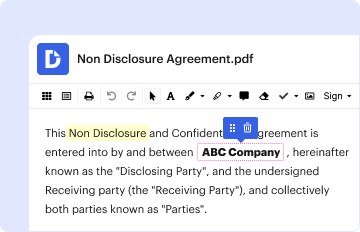
Use the top toolbar to insert fields like text and signature boxes, radio buttons, checkboxes, and more. Assign users to fields.
03. Distribute your form
Share your Simple daily cash Balance Sheet Template in seconds via email or a link. You can also download it, export it, or print it out.

A detailed guide on how to craft your Simple daily cash Balance Sheet Template online
Form edit decoration

Step 1: Start with DocHub's free trial.

Visit the DocHub website and register for the free trial. This gives you access to every feature you’ll need to create your Simple daily cash Balance Sheet Template without any upfront cost.

Step 2: Access your dashboard.

Sign in to your DocHub account and go to the dashboard.

Step 3: Craft a new document.

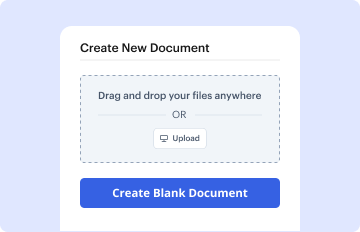
Hit New Document in your dashboard, and select Create Blank Document to design your Simple daily cash Balance Sheet Template from scratch.

Step 4: Utilize editing tools.

Place various fields such as text boxes, radio buttons, icons, signatures, etc. Organize these fields to suit the layout of your document and designate them to recipients if needed.

Step 5: Organize the form layout.

Organize your document effortlessly by adding, repositioning, deleting, or combining pages with just a few clicks.

Step 6: Craft the Simple daily cash Balance Sheet Template template.

Turn your freshly crafted form into a template if you need to send many copies of the same document multiple times.

Step 7: Save, export, or distribute the form.

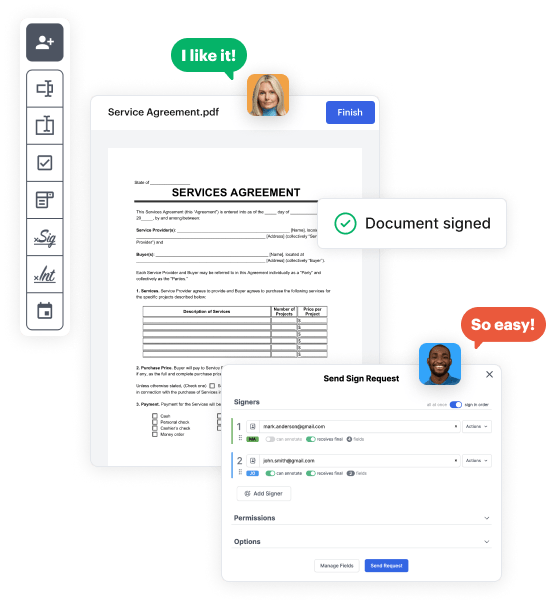
Send the form via email, distribute a public link, or even publish it online if you aim to collect responses from more recipients.


be ready to get more

Build your Simple daily cash Balance Sheet Template in minutes

Start creating now

Got questions?

We have answers to the most popular questions from our customers. If you can't find an answer to your question, please contact us.
Contact us
Creating Your Balance Sheet Select a Reporting Date. Prepare the Income Statement and Statement of Retained Earnings. List Your Assets. List Your Liabilities. Calculate Shareholders Equity. Compare Total Assets with Total Liabilities Plus Owners Equity.
(The equation at work in creating your Monthly Balance Sheet is simply: Assets = Liabilities + Equity.) A Balance Sheet can be generated at any point in time that you wish daily, weekly, monthly, quarterly, annually, etc. However, much like the Income Statement, we recommend creating one every month.
The Excel Balance Sheet Template easily integrates with Microsoft Office Suite, enabling you to import/export data effortlessly and collaborate with colleagues using familiar tools. You can also use Excels advanced analysis features, such as pivot tables and charts, to gain deeper insights into your financial data.
To prepare a balance sheet: Gather financial information on assets, liabilities, and equity. Organize assets into current and non-current categories. List liabilities, including current and non-current obligations. Calculate equity by subtracting liabilities from assets.
How to make a balance sheet Invest in accounting software. Create a heading. Use the basic accounting equation to separate each section. Include all of your assets. Create a section for liabilities. Create a section for owners equity. Add total liabilities to total owners equity.
be ready to get more

Build your Simple daily cash Balance Sheet Template in minutes

Start creating now

Related Q&A to Simple daily cash Balance Sheet Template

Step-by-Step Guide to Creating a Daily Balance Sheet in Excel Start with a Basic Template: Begin by opening a new Excel spreadsheet. Label Your Columns: Your balance sheet should include columns for assets, liabilities, and equity. Input Daily Transactions: Regularly input the daily transactions under each category.
Usually it is the instant as of the end of the day. In other words, you can have a balance sheet each day, but the balance sheet amounts represent the amount at the instant or moment after all of the transactions of the specified day have been recorded.

Additional resources on building your forms